
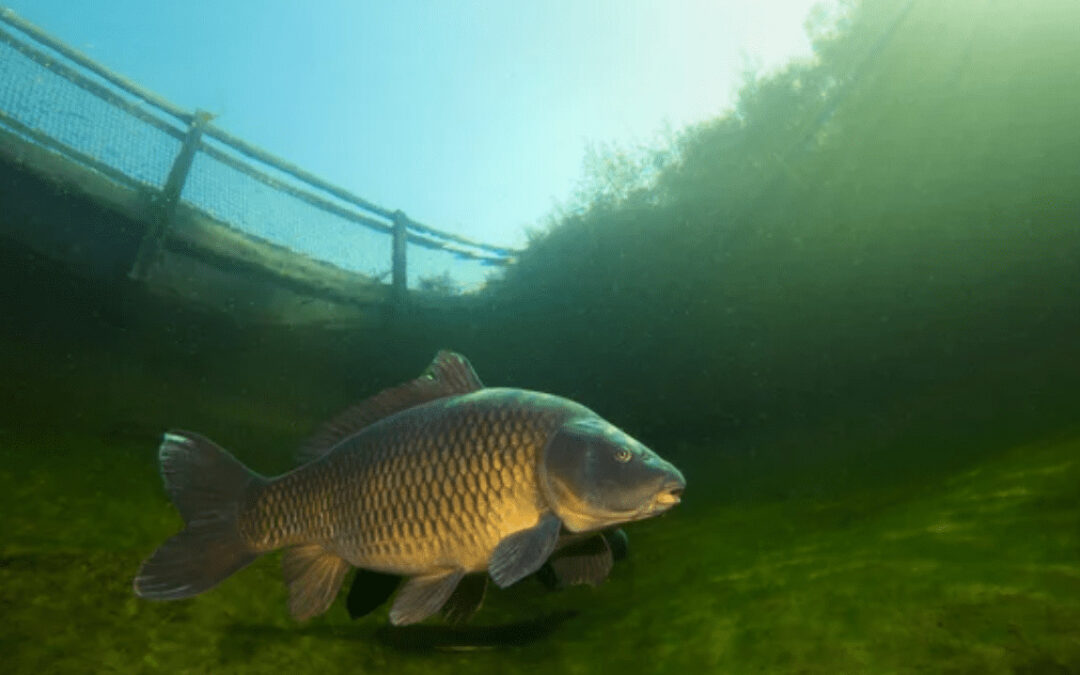
Catching a 20lb carp from a UK water is a milestone that most anglers aspire to. Catching fish of 30lb, 35lb, and beyond is a goal that defines some anglers’ entire approach to the sport. But targeting truly big carp is not simply a matter of fishing harder or using more expensive gear — it requires a fundamentally different approach to water selection, timing, bait strategy, and patience.
Updated September 2026. Two older posts on catching bigger carp and on baiting campaigns have been folded into this guide and redirect here.
Why Big Carp Are Different
A carp reaches 20lb+ by surviving. In most UK waters, that means it has been caught and returned multiple times, or it has successfully avoided capture. Either outcome produces a fish that is significantly more cautious, more experienced, and more difficult to deceive than its smaller counterparts.
Large carp are also usually dominant in the social hierarchy of their lake. They feed last, after smaller fish have taken the first pass over any bait area. They’re more likely to approach a bait cautiously, test it, and withdraw rather than eat confidently. Everything about big-fish fishing must be designed to create the conditions where a large, cautious fish will lower its guard — confident that what it’s eating is safe.
Water Selection: The Most Important Decision
The single most important factor in catching a 20lb+ carp is fishing a water that contains 20lb+ carp. This sounds obvious, but many anglers spend years targeting the same commercial day-ticket without recognising that the stock simply doesn’t contain the fish they’re after.
Research the water thoroughly before investing time in it. Online carp fishing forums, syndicate membership, and conversation with local anglers will reveal which waters in your area have a realistic chance of producing the target fish. Gravel pits, mature estate lakes, and managed syndicates are most likely to contain specimen fish. Stock-density also matters — a low-stock water allows individual fish to grow to greater weights than a heavily stocked commercial.
Timing: When Big Fish Become Catchable
Large, dominant carp have predictable seasonal patterns that differ from general stock:
- Late autumn (October–November): Before winter, big carp feed intensely to build reserves. Their guard is lower during this feeding spell than at almost any other time of year. October is statistically one of the highest-producing months for UK specimen carp
- Pre-spawn (April–May): In the weeks immediately before spawning, large fish often feed heavily as they build energy reserves for the reproductive effort. The last 2–3 weeks before spawning can be exceptional
- Midnight to dawn: On any pressured water, the hours from midnight to first light see the lowest bank disturbance and the most confident movement from large, wary fish. Overnight sessions are almost essential for specimen targeting on pressured waters
Bait Strategy for Big Fish
Long-Term Baiting Campaigns
The most effective big-fish method is a sustained pre-baiting campaign over 4–8 weeks before fishing a swim seriously. Regular introductions of quality bait — 500g to 2kg per visit, 2–3 times weekly — build a feeding association in the lake’s big fish population that is very difficult to replicate with short-notice fishing. The fish learn that a particular spot produces reliable, safe food. When you fish that spot, they arrive with confidence.
High-Quality, Single-Flavour Bait
Big, experienced carp often become suspicious of strongly flavoured, heavily marketed baits that they’ve been caught on before. Many big-fish specialists prefer a single bait applied consistently over a long period rather than switching baits frequently. The best bait for big fish is usually a quality nutritional bait — fishmeal or milk protein base — applied at enough volume over enough time that the fish regard it as a natural food source rather than an angling bait. See our complete boilies guide for nutrition-based bait selection.
Single Hookbait Fishing
On low-stock specimen waters where individual fish are targeted, a single hookbait over minimal free offering is often more effective than large beds of bait. A single 18–20mm bottom bait over 5 free offerings, fished on a precise spot identified through careful observation, puts all the pressure on the hookbait being accepted. There’s nowhere else for the fish to feed — it either takes the hookbait or doesn’t.
Running a Baiting Campaign
A big carp is caught by making a spot safe before you fish it, and that takes time and bait. Start about a month before you intend to fish. Pick two or three spots you can reach and bait accurately: the edge of a weed bed, a margin under a tree, a clean patch on a bar. Put in a couple of kilos of boilie spread across those spots on the first visit, then top up two or three times a week with less, watching for signs that it is being cleared. In summer, particles alongside the boilies draw fish in numbers and the competition drops their guard; as autumn cools, increase the boilie and drop the particles; in winter, a couple of handfuls a day is plenty, and in a hard frost stop altogether.
Use one bait and stick to it. A good quality fishmeal or nut boilie, one flavour, the same one on the hook, so the fish learn that this food is safe. Five kilos of boilie applied three times a week is not cheap, which is why chickpeas at fifteen pounds a sack and hemp are the campaign angler’s friends: the boilies become the hookbaits and the particles keep the fish coming. Bait the spots where fish have been caught before as well as the new ones; a spot with history is a spot the fish already trust.
When you fish, fish the edge of the baited area with a single hookbait or a small PVA bag, not the middle. The oldest fish in a lake learn to tell suspended free food from a tethered hookbait, and they eat around it; a bait on the edge, presented slightly differently, is what catches them. Strip the visual clutter off the rig, keep the line pinned down, and fish the hours you have seen the big fish show. Then be patient. On the heaviest-line waters I fish 20lb to 30lb line and lock the reels, but strength of tackle never caught a big carp; the month of baiting did.
For the rigs that suit cautious fish see the complete rig guide, and for how to spot the fish you are baiting for, the watercraft guide.
Presentation for Cautious Fish
Big carp require the most careful rig presentation of any fishing situation:
- Use the lightest mainline you’re confident playing the fish on — 12lb mono rather than 15lb wherever the snag situation allows
- A fluorocarbon hooklink (15–20lb) blends into a gravel or clay lakebed far better than dark coated braid
- The Hinged Stiff Link with a critically balanced pop-up is a proven big-fish rig — the hook’s mechanical properties are harder to counter than most alternatives
- Check your hook point before every session. Big fish will test and eject a dull hook without leaving a mark
Patience Is the Non-Negotiable Variable
Targeting specimen carp requires more patience than general carp fishing. A run on a big fish syndicate might come once in 10 sessions — but that run might be a 30lb fish that represents a personal best. Managing expectations and maintaining confidence through blank sessions is a genuine skill. Keep a detailed session log — mapping your swim and noting conditions, feeding signs, and observations across multiple sessions builds the knowledge that produces results.
For the complete range of rigs and tactics that support big-fish specimen fishing, see our complete guide to carp rigs. For choosing the right water for your current level, our guide to types of fishing venues helps you assess where to invest your time.
Read next
Last Updated on September 10, 2026 by Shane Stanford
Shane Stanford has fished for carp for over twenty years, in the UK and in France, and currently fishes a private syndicate water in West Sussex. He writes Fishing Again to put the things he learned the hard way into plain language: location and watercraft first, then bait, rigs and gear. He is straight about which kit he has actually fished and which he has assessed on specification, and says so on the page.


