
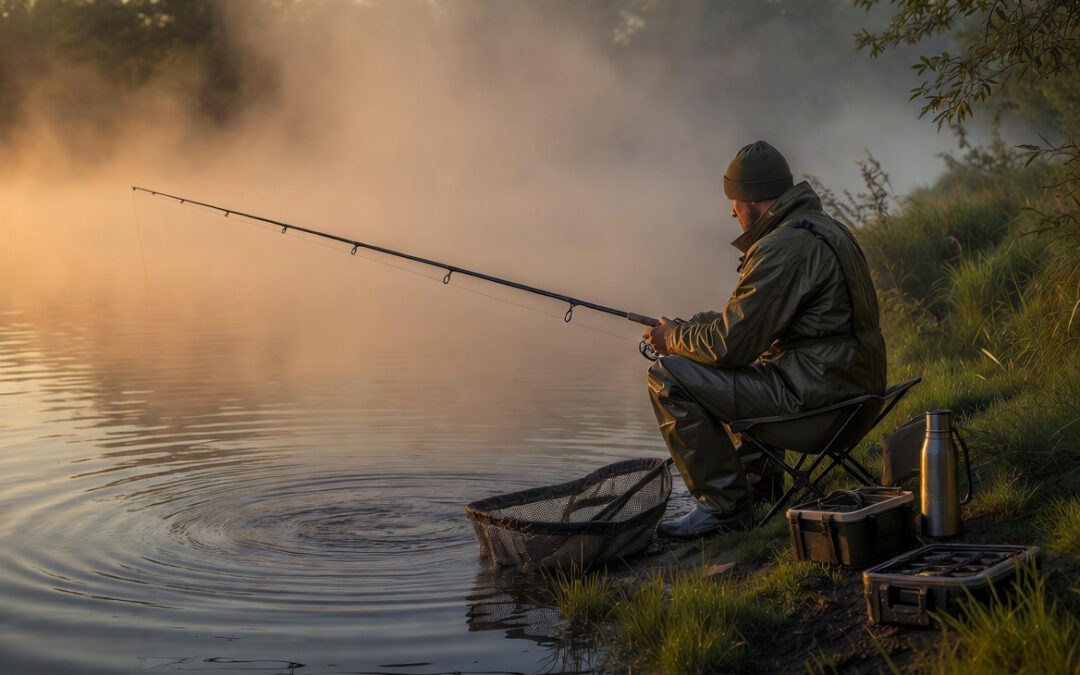
A carp syndicate is a private carp fishing lake managed by a small group of anglers (the syndicate) rather than a commercial fishery business. Membership is usually limited — often to 20–60 anglers depending on lake size — and the membership fee funds the management of the lake, including stocking, weed control, security, and habitat improvement.
Syndicate lakes represent some of the finest carp fishing in the UK. The fish are typically large, the pressure is lower than day-ticket waters, and the social atmosphere of a committed angling group creates a distinctive fishing culture. They’re also significantly harder to access and fish than commercial day-ticket venues — which is precisely what makes them so rewarding.
What Makes Syndicate Fishing Different
Lower Angling Pressure
A 5-acre day-ticket lake might see 50 anglers on a busy Saturday. A 5-acre syndicate lake with 40 members might see 8–10 anglers across an entire weekend, many of whom know the water intimately. The reduced pressure means fish are less rig-educated than on commercial waters — but they’re not naive. Long-term residents of low-pressure waters become wary through experience rather than through encountering hundreds of different rigs.
Fish Quality
Syndicates typically run at lower stock density than commercial fisheries, allowing individual fish to grow to greater weights. It’s not uncommon for a well-managed 10-acre syndicate to hold carp in the 30–40lb range, which would be exceptional at most commercial day-tickets. The welfare and condition of individual fish is usually very high because the small membership group has a vested interest in looking after them.
Member Commitment
Syndicate membership is a commitment. Most require members to contribute to the management of the lake — helping with weed cutting, bank maintenance, banking meetings, and sometimes bailiff duties. This involvement is part of what makes syndicate fishing culturally distinct from day-ticket fishing.
How to Find a Syndicate
Ask at Local Tackle Shops
Local fishing tackle shops are the most reliable source of intelligence on syndicates in your area. Shop staff are usually involved in local angling themselves and know which syndicates are recruiting. Many syndicates advertise only through local tackle shops — never online — to avoid attracting undesirable attention.
Angling Clubs
Many syndicates are managed by local angling clubs. Joining your county’s main angling club often grants access to a portfolio of waters including one or more syndicate lakes. The EA and Angling Trust both maintain lists of affiliated clubs.
Online Forums and Carp Fishing Communities
CarpTalk, The Carp Forums, and local Facebook fishing groups occasionally advertise syndicate vacancies. More commonly, members of these forums will know of local vacancies from their networks. Posting a polite, well-worded request on a local fishing forum asking about syndicate vacancies in your area often produces results.
Walk the Banks
If you see an unmarked private lake during a drive through the countryside, it may be a syndicate. The owner of the surrounding land may know, or a polite enquiry to a local tackle shop will sometimes confirm what you’re looking at.
What Syndicates Look for in Members
Most syndicates have waiting lists and interview prospective members. What they typically assess:
- Carp care standards — can you demonstrate proper carp care? Do you own a good unhooking mat, forceps, carp care kit?
- Experience level — some syndicates require a minimum level of experience. Be honest about your background
- Local reputation — your behaviour on other waters matters. Tackle shop staff talk to syndicate managers regularly
- Willingness to contribute — are you prepared to give time to the maintenance and management of the lake?
Fishing a Syndicate Lake for the First Time
The most important thing on any new water — syndicate or otherwise — is to spend the first session watching before fishing. Walk the entire lake with polarised sunglasses. Look for fish, find the features with a marker float, talk to other members.
Syndicate fish are often large and wary. The Hinged Stiff Link, Combi Rig, and Blowback Rig are the go-to rigs for careful, wary fish. Long-term pre-baiting campaigns are often the only reliable way to establish a productive swim. Patience and persistence are rewarded more than tactical improvisation.
See our guide on how to fish gravel pits for related tactics, and our guide to watercraft for reading any carp water for the observation skills that separate good syndicate anglers from average ones.
Read next: not sure a syndicate is right for you yet? Day ticket, club water or syndicate: which is right for you sets the three side by side.
Last Updated on September 10, 2026 by Shane Stanford
Shane Stanford has fished for carp for over twenty years, in the UK and in France, and currently fishes a private syndicate water in West Sussex. He writes Fishing Again to put the things he learned the hard way into plain language: location and watercraft first, then bait, rigs and gear. He is straight about which kit he has actually fished and which he has assessed on specification, and says so on the page.


