
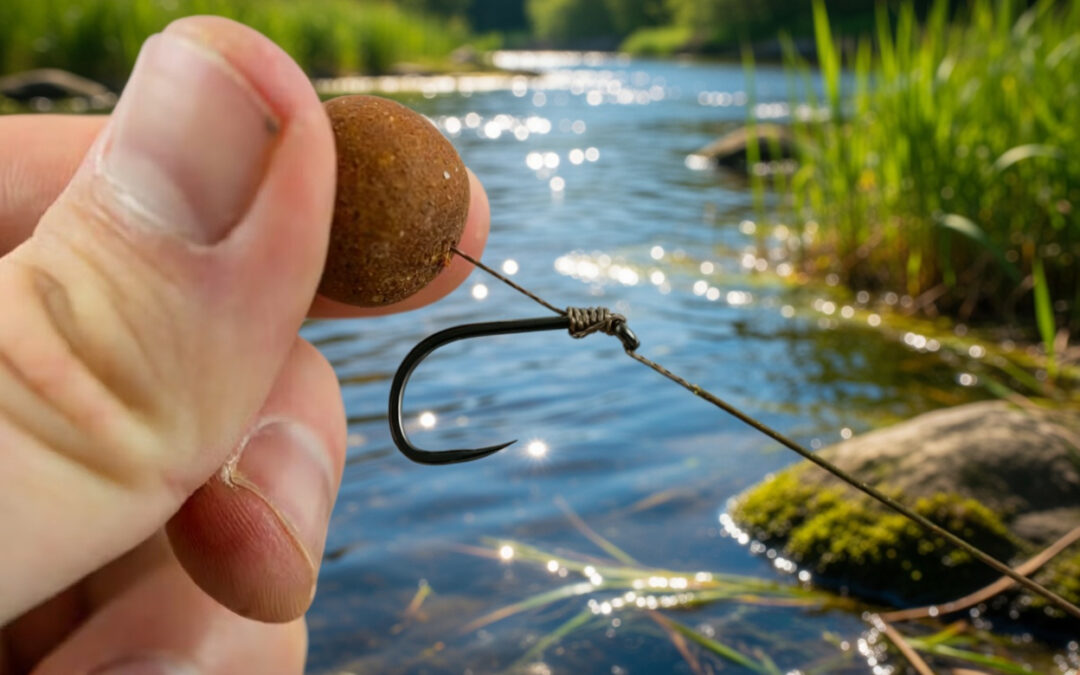
The Slip-D Rig is a close relative of the D-Rig. It uses the same D-shaped sliding loop concept but with a key modification: instead of the loop being formed from mono attached at the hook eye, the Slip-D is configured so the hookbait can slide more freely along an extended hair, creating even faster rotation on the take.
The Slip-D is the preferred surface fishing rig of many UK specimen anglers. It’s particularly effective for floater fishing because carp suck in and blow out surface baits extremely quickly — faster than any bottom-feeding take. The Slip-D’s aggressive hook rotation mechanism catches fish that eject a standard surface hair rig without the angler even knowing they’ve had a take.
Slip-D vs Standard D-Rig
On a standard D-Rig, the D-loop is small and the hookbait is mounted directly on the loop. On a Slip-D, the hookbait is on a longer hair that is threaded through a small ring or micro ring on the bend of the hook. This ring allows the hair to slide through freely in any direction, giving the hookbait complete freedom to slip out of the way when the hook rotates.
The practical result: on a surface take, a carp sucking in the bait causes the hookbait to slip upward through the ring as the hook rotates down — the two elements move independently, which makes ejection almost impossible before the hook takes hold.
What You Need for the Slip-D Rig
- Curve or wide-gape hook, size 4–8 depending on hookbait size
- Micro ring or small rig ring — approximately 2mm diameter — to slide onto the hook bend
- Light fluorocarbon for the hair — 10–12lb, approximately 8–10cm from hook bend to hookbait. Fluorocarbon sinks and keeps the hair out of the surface film, preventing the rig floating unnaturally
- Hooklink or mainline: For surface fishing, 8–10lb clear or brown fluorocarbon or monofilament. Lighter than bottom-bait rigs — surface-feeding fish are particularly line-shy
How to Tie the Slip-D Rig
- Slide a micro ring onto the hook — position it at the bend of the hook, behind the point. Test that it slides freely around the bend before tying anything
- Attach the hook to the hooklink using a knotless knot with no hair — same method as for the standard D-Rig. The knotless knot wraps down the shank and passes back through the eye. Pull tight and trim the tag end
- Create the hair: Cut 10cm of fluorocarbon. Tie a small loop at one end (for the bait stop). Thread the other end through the micro ring on the hook bend. Leave 6–8cm of free hair between the ring and the hookbait loop
- Secure the hair at the top: Take the free end of the hair above the ring and make a simple overhand knot around the hook shank, just above the knotless knot wraps. This retains the hair on the rig while allowing it to slide freely through the ring at the bend
- Mount the hookbait: Thread the hair loop through the hookbait with a baiting needle, then insert the bait stop. The hookbait should sit approximately 1–2cm below the hook bend
Fishing the Slip-D on the Surface
For surface fishing, set up with a controller float or a freelined approach depending on distance. Our surface fishing guide and summer surface fishing tips cover approach and bait delivery in detail. The Slip-D hook arrangement is the same — simply replace the hookbait with a buoyant dog biscuit, artificial floater, or surface popup.
Pre-bait the area with free offerings until fish are actively feeding from the surface, then cast the hookbait among them. Set the rod on a rest pointing along the line — don’t hold it. Most surface strikes are better made with a smooth, firm side strike (parallel to the water) rather than an upward sweep, which can pull the hook out of a taking fish’s upward movement.
Slip-D for Pop-Up Bottom Fishing
The Slip-D works equally well as a bottom rig pop-up presentation. In this configuration, fish it identically to a critically balanced D-Rig — with tungsten putty on the hooklink to pin the rig to the bottom while the pop-up sits just above the lakebed. The mechanics of the sliding hair through the ring remain the same regardless of whether you’re fishing on the surface or the bottom.
For more pop-up fishing tactics, see our complete pop-up guide. For the full range of rig options and the situations that suit each one, return to the complete carp rig guide.
Last Updated on September 9, 2026 by Shane Stanford
Shane Stanford has fished for carp for over twenty years, in the UK and in France, and currently fishes a private syndicate water in West Sussex. He writes Fishing Again to put the things he learned the hard way into plain language: location and watercraft first, then bait, rigs and gear. He is straight about which kit he has actually fished and which he has assessed on specification, and says so on the page.


