
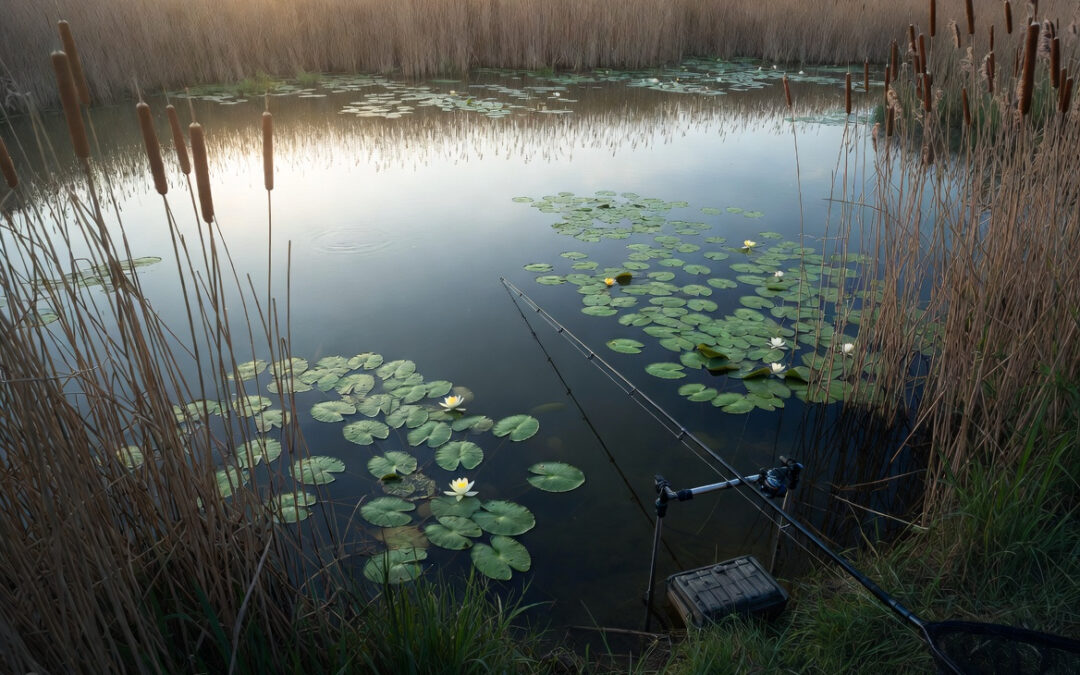
Spring carp fishing — roughly March through May on UK waters — offers some of the most exciting angling of the year. After months of winter lethargy, carp begin feeding more aggressively as water temperatures rise. If you understand the triggers and adjust your approach accordingly, spring can be your most productive season.
Why Spring Is a Turning Point
Carp are cold-blooded. Their metabolism, feeding activity, and movement are almost entirely dictated by water temperature. The key trigger is the 10°C threshold. Below 10°C, carp feed sparingly and move slowly. As water temperature rises toward and past 10°C in spring, metabolic rates increase rapidly — carp need more food, move more freely, and become significantly easier to catch. For a full breakdown of how temperature affects carp behaviour, see our guide to best water temperature for carp fishing.
The key spring window typically opens in late March on southern UK waters and early-to-mid April on northern waters. Watch the long-range weather forecasts — a sustained warm spell after the first mild days signals the start of genuine spring feeding.
Where to Find Carp in Spring
In spring, carp move for three primary reasons: warmth, food, and pre-spawning behaviour. Knowing which drives the fish on any given day tells you exactly where to look.
Follow the Sun-Warmed Areas
The sun’s angle in spring means it heats shallow, south-facing margins and bays first. Carp actively seek these warm areas — a 2°C difference between a shallow sun-warmed bay and the deeper open water is enough to pull fish. If you arrive at a lake in the morning and the sun is warming a particular bank or bay, fish will be there before midday.
Inspect the Margins
Spring is prime time for stalking and margin fishing. Carp cruise the shallows regularly, often visible just below the surface. Walk the entire lake perimeter with polarised sunglasses before setting up. Polarised sunglasses are essential for seeing fish through surface glare.
Spawning Areas
From late April into May, carp focus on spawning. They gravitate toward shallow, weedy areas with dense aquatic vegetation — reeds, lily pads, marginal grasses. Pre-spawn fish can be seen rolling, crashing, and thrashing in these areas. Fishing very close to these zones — but not directly in them — can be extremely productive in the days before spawning begins.
Spring Bait Choices
Spring fishing requires a rethink on bait quantity and composition. In early spring (March to mid-April) when water is still cold:
High-Attract, Low-Quantity
The carp’s digestive system is still relatively sluggish. They need bait that stimulates feeding interest without requiring them to eat large quantities. High-protein, highly soluble baits are ideal — small amounts of a strongly flavoured bait rather than large bed of free offerings.
- Wafters and pop-ups over sparse loose feeding work exceptionally well in early spring. High-attract yellow, white, and orange hookbaits stand out against a cold, dark lakebed
- High-attract liquid-soaked boilies — glugging your hookbaits in strong attractants overnight before a spring session increases the soluble attraction without increasing bait volume. See our guide on oils and liquids for carp fishing
- Tiger nuts and hemp — natural seed baits work consistently from early spring. Small, nutritious particles encourage carp to root and feed once water temperatures allow
Ramping Up in Late Spring
From late April into May, as water temperatures push past 12–15°C, carp are feeding hard in the pre-spawn window. This is when larger beds of bait come into their own. Pre-baiting a swim in the days before a spring session can produce exceptional results — fish actively patrol established bait areas.
Spring Rig Choices
In early spring on clean-bottomed spots: a Ronnie Rig with a bright pop-up or wafter works exceptionally well. As temperature rises and bottom-bait fishing becomes more effective from late April: a Combi Rig or Blowback Rig with a quality boilie bottom bait is a consistent choice.
For stalking and margin fishing in spring, keep rigs simple: a single piece of floating dog biscuit on a size 6 hook and 8lb fluorocarbon is all you need. See our surface fishing for carp guide for surface presentation tactics.
Spring Session Timing
In spring, afternoons and evenings are typically more productive than early mornings — the sun has had time to warm the water from midday onward. This contrasts with summer and autumn, where dawn sessions are often most active. An afternoon arrival fishing through to dark is a reliable spring session structure on most UK waters.
For a complete breakdown of how fishing changes through every month of the year, see our guides to winter carp fishing and autumn carp fishing. Our seasonal guide to carp fishing covers the complete year in one place.
Read next: spring ends with spawning, and the weeks either side of it are covered in carp spawning: when it happens and how to fish around it. The close season guide explains why lakes stay open.
Last Updated on September 10, 2026 by Shane Stanford
Shane Stanford has fished for carp for over twenty years, in the UK and in France, and currently fishes a private syndicate water in West Sussex. He writes Fishing Again to put the things he learned the hard way into plain language: location and watercraft first, then bait, rigs and gear. He is straight about which kit he has actually fished and which he has assessed on specification, and says so on the page.


