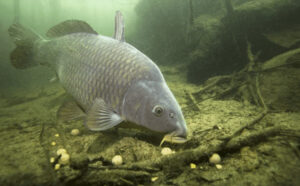
Summer carp fishing in June, July, and August presents a paradox that frustrates many anglers: the fish are at their most visible — cruising near the surface, rolling at dawn, active all day — but can be some of the hardest to catch. Understanding why summer carp behave as they do is the key to catching them consistently during this challenging and exciting season.
The Summer Challenge: Oxygen and Temperature
Warm water holds significantly less dissolved oxygen than cold water. In July and August, surface water temperatures on shallow UK lakes can exceed 20°C — and oxygen levels drop accordingly. Carp respond by spending more time in the well-oxygenated upper water layers, near surface disturbance, weed beds that produce oxygen through photosynthesis, and areas with inflow or movement.
This explains the characteristic summer feeding pattern: dawn and dusk (when oxygen levels are more stable and temperatures cooler) are the prime feeding windows. The heat of midday often produces little bottom-feeding activity — the fish are simply riding the upper layers, not looking to feed heavily from the bottom. See our seasonal guide to carp feeding times for how this changes through the year.
Where to Find Carp in Summer
Follow the Dissolved Oxygen
- Weed beds: Actively photosynthesising weed produces oxygen. Carp congregate in and around weed during summer more than any other season. Fishing tight to weed edges, or on clear spots surrounded by weed, is extremely productive
- Shaded areas: Overhanging trees and bushes provide relief from direct sun and slightly cooler micro-environments. Carp hold under overhanging trees consistently in summer
- Windward banks and inflows: Wind pushes oxygenated surface water to the downwind bank, and carp follow it. If a strong prevailing wind has been blowing for 24+ hours, fish the downwind bank. Any stream or inflow brings cooler, more oxygenated water — worth fishing close to these in warm weather
The Surface Zone
In warm summer weather, carp spend hours riding just below the surface. These fish are feeding — they’re just feeding on daphnia, surface insects, and floating food items, not bottom baits. This is when surface fishing tactics become essential.
Surface Fishing in Summer
Surface fishing for carp is one of the most visual and exciting methods available. Watching a large carp suck in a floating dog biscuit you’ve thrown out 10 minutes earlier is something no bottom-bait angler experiences. Our complete surface fishing guide and our guide to surface floater fishing tips cover setup and approach in full detail.
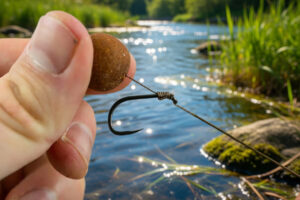
The key principle: pre-bait with loose floating dog biscuits thrown by hand until fish are confidently accepting them, then introduce the hookbait on light tackle (8lb fluorocarbon, size 6–8 hook, controller float or free-lined).
The Zig Rig in Summer
When carp are clearly riding at mid-water but not feeding on the surface, the Zig Rig bridges the gap between bottom-bait and surface fishing. Suspend a small buoyant hookbait (yellow foam, black Zig bug, or white pop-up) at the depth where the fish are sitting — identified by walking the bank and watching with polarised glasses — and you’re presenting at their exact level.
June and July afternoons are the peak period for Zig fishing in the UK. Fish suspended at 4–6 feet in 10 feet of water in the early afternoon can shift to 2 feet from the surface by 4pm as the upper layer heats up further. Adjust the Zig depth every 30–45 minutes until you find the fish.
Summer Bottom Bait Tactics
Despite the surface activity, bottom bait fishing absolutely works in summer — you just need to time it correctly. The best summer bottom sessions are:
- Overnight (10pm–7am) — the cooler night air drops surface temperature and brings fish down to feed from the bottom. This is the most productive 9-hour window for bottom baits in summer. See our night fishing guide for overnight session preparation
- Dawn sessions (4–8am) — the coolest period of the 24-hour cycle, when bottom feeding resumes before the heat builds
- After a cold front — a brief cold snap in summer, even overnight, drops temperatures and increases oxygen. The morning after such a front is often exceptionally productive
Summer Bait Choices
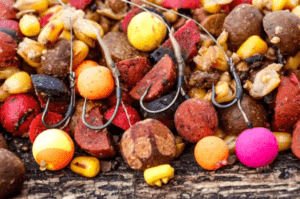
In warm water, bait breakdown and flavour leakage are accelerated. High-attract boilies and hookbaits work particularly well in summer because the increased water temperature speeds up the dissolving of attractants. Change hookbaits every 2–3 hours in very warm water — old, leached-out hookbaits on a summer day lose their attraction fast.
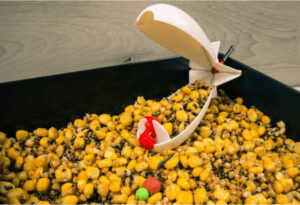
Particle baits (hemp, corn, tiger nuts) are excellent in summer — see our particles guide. The sweet compounds in corn and the aromatic oils in hemp diffuse quickly in warm water, creating a wide, attractive scent trail. A light spod of hemp and corn over a Combi Rig hookbait at dawn is a classic summer method that produces year after year.
For more on fishing across all four seasons, see our guides to spring carp fishing, autumn carp fishing, and winter carp fishing. Together they form a complete year-round carp fishing reference.
Last Updated on June 11, 2026 by Shane
I have made a lot of mistakes during my fishing sessions and don't want you to make the same mistakes. I've learned the hard way over 20 years of fishing most weekends, testing, tweaking, and testing again and now want to help you excel with your carp fishing.
If you need any help, you can reach me at Fishing Again's Facebook page