

Beginners · Rigs
Carp rigs for beginners: the precise guide UK 2026
Rigs are the one part of carp fishing every beginner has to learn. Until you know how a hair rig works, why safety matters and which rig suits which lake bed, you are limiting your chances. Here is the precise guide.

As an Amazon Associate I earn from qualifying purchases. Buttons link to Amazon UK and cost you nothing extra. Read my affiliate disclosure. Prices change daily, so I give price bands in words: click through for today's price.
- Start withHair rig
- Rig length4 to 8in
- Checked17 Nov 2026
- BasisGeneral practice + specs
- PricesLive on Amazon UK
As a beginner, you need to learn how to tie carp rigs, which rig to use in each situation, what size hooks to use and why, and which hook patterns suit which rigs. This guide covers all of that, starting with the simple hair rig and building up to pop-up presentations.
The lead must always be able to come free.
The few products below are specific Amazon UK listings checked on the date shown, with specifications from Fox. They are the basic components a beginner needs.
The basics
Methods, the hair rig and safety
Three ways to catch carp
Surface fishing targets fish at the top (surface fishing). Zig rigs fish the middle layers (zig rigs). Ledger fishing puts the bait on or close to the bottom, and has the most rig types, so it is the focus here.
Why rigs matter
Every lake bed is different. A ledger rig has to follow the contours, sit above weed or silt, and keep the hook clear of debris. Different rigs suit different lake beds. Ready-tied rigs are a good start, but tying your own lets you shorten a rig or change the hook when you need to.
How a hair rig works
Carp feed by sucking food in, sorting it, and blowing out what they do not want. The bait sits on a hair below the hook, held with a boilie stop. When a carp sucks in the bait, the hook follows. As the fish moves away, the lead helps pull the hook into the lip.
Tying a hair rig
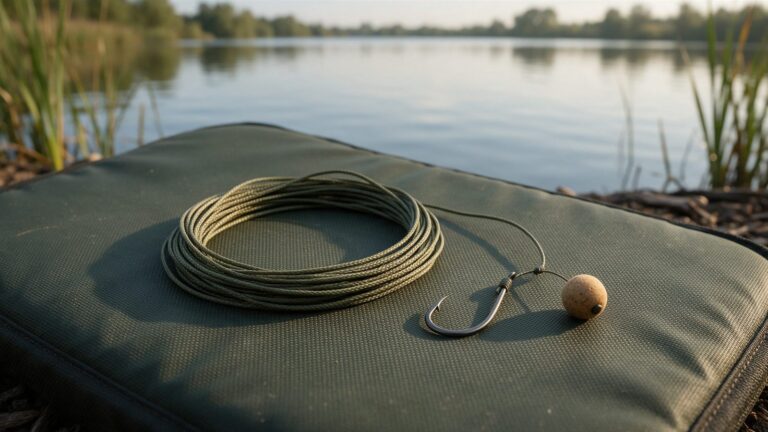
A simple hair rig has three parts: hooklink, hook and bait. The hooklink is tied to the hook with a knotless knot, the bait goes on the hair, and the hooklink attaches to the main line via a swivel. Sharp scissors make it much easier: see the best scissors for rigs and how to tie a hair rig.
Safety rigs
If the main line breaks, a fish must never be left towing a lead that could snag and tether it. On standard hair rigs, a lead clip holds the lead on the cast and releases it under pressure. On chod and helicopter setups, the lead sits on the main line between beads, and the top bead must be able to slide off so the rig comes free.
PVA bag rigs
A short rig made to fit inside a PVA bag, so the hook bait sits in a tight pile of feed. See how to use PVA bags and mesh.
Sizes, lengths and leads
Hooks, rig length and lead size
Hook size
As a rough guide: size 14 to 10 for single-figure carp, 10 to 6 for doubles, and 6 to 4 on waters with many 20lb-plus fish. Match the hook to the bait size too, and try different sizes to see what works on your water. See carp hooks.
Rig length
Most hair rigs are 4 to 8 inches. In the margins, targeting individual fish, a short 4in rig means the fish meets the lead quickly. In open water with spread bait and more lake-bed contours, around 8in often works better. See how long should a carp rig be.
Lead size
The lead casts the rig and helps set the hook, but a carp can also shake its head and use a heavy lead to lever the hook out. A common approach is to use a lead just heavy enough to reach your spot: around 2oz in the margins, heavier for distance, with 4oz kept for long casting. See which leads to use.
Lead clips
Most do the same job. Look for one that blends into the lake bed and releases the lead cleanly. In heavy weed, dropping the lead can help bring a fish up out of the weed.
Rig tubing
Tubing protects the fish's flanks from the line and reduces tangles, because its thicker diameter stops the hooklink wrapping around the main line. Make it a little longer than the hooklink. It also works in helicopter setups where a venue bans leaders. Modern tubing is supple and sinks well.
Rig types
Helicopter, pop-up and other rigs
The helicopter rig
The hooklink sits above the lead on the leader, between beads, so it rarely tangles and can be fished over a variety of lake beds including light weed and silt. Moving the top bead up the leader lets the hooklink settle on top of silt or light weed rather than being pulled into it.
Pop-up rigs
The stiff hinged rig is a popular pop-up rig for big fish, presenting the bait a couple of inches off the bottom. Pop-ups need to be buoyant enough: cork ball and air-ball styles both work. Always check in the edge that the rig sits as you expect. See pop-ups vs bottom baits.
The Ronnie rig
Also called the spinner rig, the Ronnie uses a curve-shank hook on a quick-change swivel and is usually fished with a pop-up just off the bottom. It suits clean or lightly silty lake beds rather than thick weed. See the Ronnie rig guide.
The 360 rig
A pop-up rig with a long-shank, curved hook that can rotate freely, so it turns and takes hold quickly. It works on several lake beds but not in weed. A stiff hooklink suits clean gravel, a supple braid suits silt.
The Withy Pool rig
A long, curved section of shrink tube below the eye gives an aggressive hooking angle. It is fished with a buoyant pop-up, using a curve-shank hook, shrink tube, a rig ring, bait floss, a coated braid hooklink and a split shot to balance it.
How to stop rig tangles
- Use a stiffer or coated hooklink suited to the cast and range.
- Fit an anti-tangle sleeve or a short length of tubing over the swivel.
- Feather the line as the lead nears the water so the rig lands straight out beyond the lead.
- Keep hooklinks around 4 to 8 inches unless there is a reason to go longer.
- Use a PVA stick, bag or nugget to hold the rig together on the way down.
- Check for line twist and debris on the hook every time you reel in.

Top picks
The components to start with.
Ready-made rigs, hooks for tying your own, and a safe lead clip system.
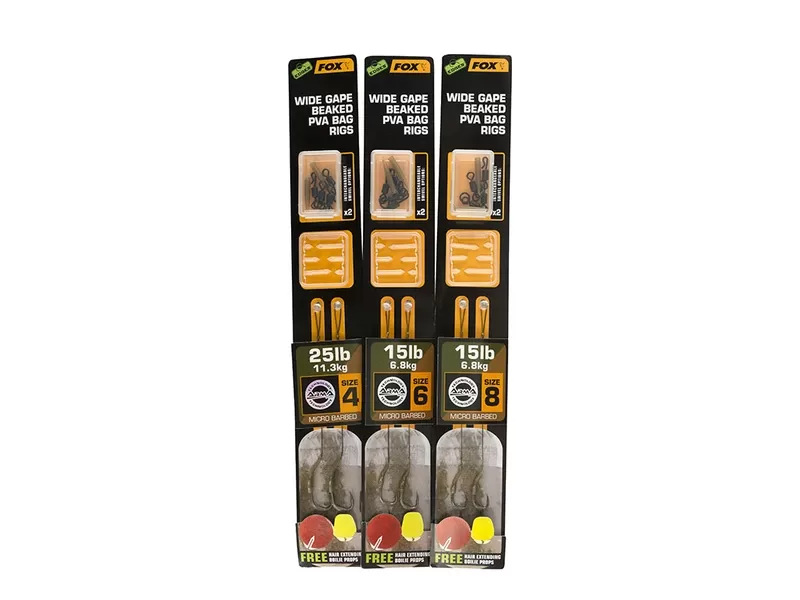
Fox Edges Wide Gape Beaked PVA Ready Rigs (2 rigs)
Fox Edges Wide Gape Beaked PVA ready rigs: tied and ready.
Budget · Amazon 4.6 out of 5 from 78 ratingsCheck price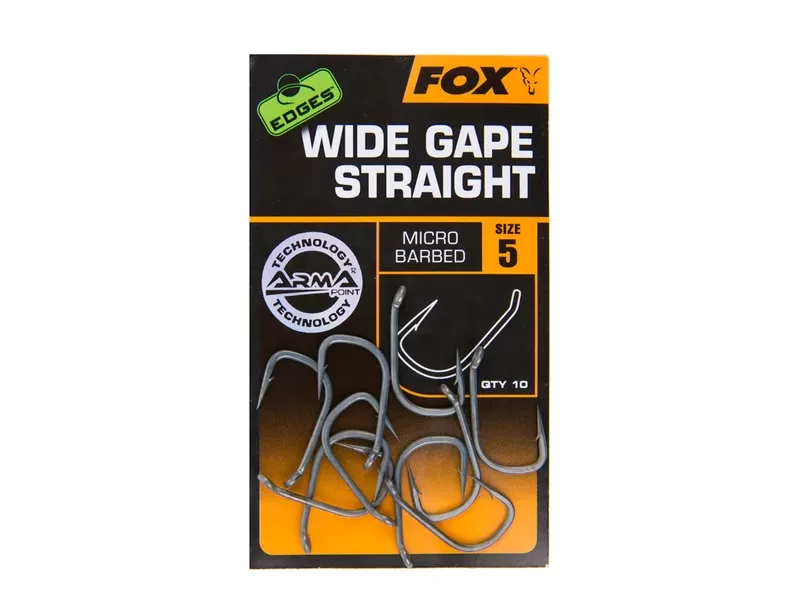
Fox Edges Arma Point Wide Gape Straight Hooks
Fox Edges Arma Point Wide Gape: the all-round pattern.
Budget · Amazon 4.7 out of 5 from 252 ratingsCheck price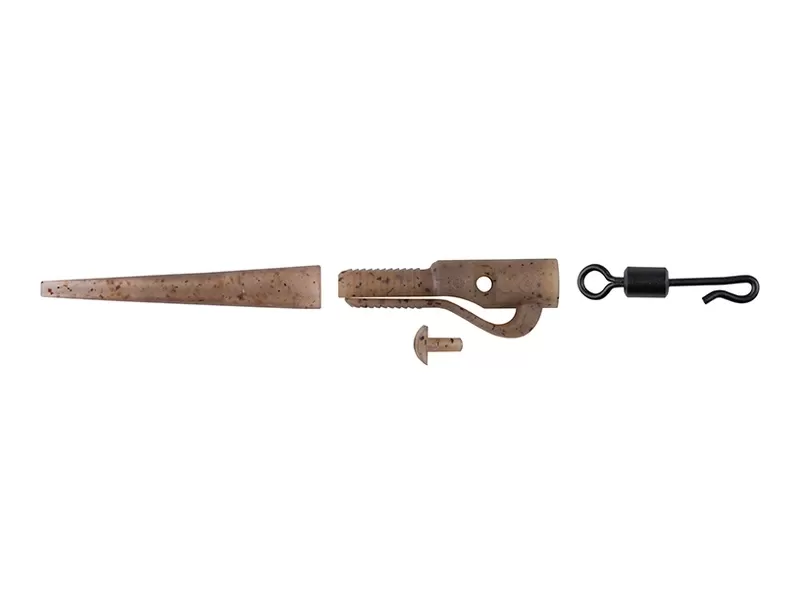
Fox Edges Camo Safety Lead Clip Kit
Fox Edges camo safety lead clip kit: fish-safe release.
Budget · Amazon 4.5 out of 5 from 145 ratingsCheck priceAlso recommended
Comparison
Three components, side by side.
Specs from Fox product information and the Amazon UK listings, checked 17 November 2026.
| Item | What it is | Key detail | Why you need it | Price band | Link |
|---|---|---|---|---|---|
| Fox Edges Wide Gape Beaked PVA Ready Rigs (2 rigs)Best ready-made rigs | Ready-tied rigs (2) | Wide gape beaked hook, short for PVA bags | Fishing straight away | Budget | Check price |
| Fox Edges Arma Point Wide Gape Straight HooksBest hooks to tie your own | Hooks (10) | Wide gape straight, micro barbed | Tying your own hair rigs | Budget | Check price |
| Fox Edges Camo Safety Lead Clip KitBest lead clip system | Lead clip kit | Clips, tail rubbers, tubing | Safe lead release | Budget | Check price |
The reviews
The components, reviewed.
Ready-made rigs to start, hooks for tying your own, and a safe lead clip system.
- What it is
- Ready-tied rigs (2)
- Key detail
- Wide gape beaked hook, short for PVA bags
- Why you need it
- Fishing straight away
- Price band
- Budget
No. 01 / Best ready-made rigs
Fox Edges Wide Gape Beaked PVA Ready Rigs (2 rigs)
Ready-tied rigs let you start fishing before you have mastered the knotless knot. They cost more than tying your own over time, but they are a good way to see how a well-made rig should look.
These are short Fox Edges rigs on a wide gape beaked hook, designed to fit inside a PVA bag. See the solid PVA bag rig.
Pros
- Ready to use
- Short for PVA bags
- Proven wide gape pattern
- Well rated on Amazon UK
Cons
- More expensive than tying your own
- Fixed length and hook size
The honest drawbackLearn to tie your own as soon as you can, so you can change length and hook size for each swim.
VerdictA reliable way to start fishing straight away.
Check price- What it is
- Hooks (10)
- Key detail
- Wide gape straight, micro barbed
- Why you need it
- Tying your own hair rigs
- Price band
- Budget
No. 02 / Best hooks to tie your own
Fox Edges Arma Point Wide Gape Straight Hooks
The wide gape is the classic all-round carp hook. It is short shanked, gives good hook holds, and works for both bottom baits and pop-ups. You can extend its effective length with shrink tube or a line aligner.
Fox's Arma Point version is micro barbed, sold in packs of 10, and has hundreds of Amazon UK ratings. See carp hook patterns explained.
Pros
- Versatile all-round pattern
- Micro barbed
- Packs of 10
- Hundreds of Amazon UK ratings
Cons
- Choose the right size for your fish
- Check fishery rules on barbs
The honest drawbackCheck the point after every fish and every snag. A blunt hook loses fish.
VerdictThe one hook pattern every beginner should start with.
Check price- What it is
- Lead clip kit
- Key detail
- Clips, tail rubbers, tubing
- Why you need it
- Safe lead release
- Price band
- Budget
No. 03 / Best lead clip system
Fox Edges Camo Safety Lead Clip Kit
A lead clip holds the lead on the cast but lets it pull free if a fish snags you, so the fish is never left tethered. This kit includes the clips, tail rubbers and tubing in a camo finish that blends into most lake beds.
Push the tail rubber on only far enough to hold the lead on the cast. See lead clip vs inline vs helicopter.
Pros
- Fish-safe lead release
- Camo finish
- Complete kit
- Well rated on Amazon UK
Cons
- Tail rubber must be set correctly
- Small parts are easy to lose on the bank
The honest drawbackIf the tail rubber is pushed fully home, the lead may not release. That defeats the point.
VerdictThe standard safe setup for a hair rig.
Check priceBuying guide
Hook patterns and rig parts.
Wide gape, long shank, curve shank, chod, and the small parts.

Wide gape
The classic short-shank pattern. Very versatile, with excellent hook holds, for bottom baits and pop-ups.
Long shank
Less fashionable than it was, but good for blowback rigs, with plenty of shank for a rig ring to slide on. See the blowback rig.
Curve shank
Turns and takes hold quickly, which suits pop-up presentations such as the Ronnie rig. Some fisheries restrict aggressive curve-shank patterns, so check the rules.
Chod hooks
An out-turned-eye pattern designed to work with stiff materials in chod and stiff hinged rigs.
Swivels, rings, beads and clips
A size 8 or 10 swivel suits most hooklinks, size 11 or smaller suits finesse rigs, and quick-change swivels let you swap a hooklink in seconds. Match the swivel's strength to the hooklink. Rig rings and micro rings give a free-moving attachment for a hair or pop-up. Beads protect knots, and the tail rubber on a lead clip lets the lead release under pressure. See rig swivels explained.
Helping the hook turn
A short length of shrink tube over the eye, such as Korda shrink tube, works as a line aligner and helps the hook kick round. A kicker above the eye pushes the hooklink out at a wider angle. Moving a hook bead up or down the shank changes the hooking angle, so test a few positions in the edge. Set the hair so the bait sits just clear of the bend.
Method
How I chose
The rig advice on this page is general carp fishing practice. The products are chosen on Fox's published specifications and Amazon UK buyer feedback, following my how I test rules. I looked for:
- basic, proven components for beginners
- fish-safe designs
- products that are actually available on Amazon UK now
- Amazon UK star ratings and the number of buyers behind them
Every item was on sale on Amazon UK when I checked on 17 November 2026, and every button goes straight to that product's page. Product photos are the brands' own studio images, credited under each one, so you can see exactly which product I mean. Click through to Amazon for the current listing and price.
FAQs
Questions, answered.
What anglers ask most, with straight answers.
What is the best carp rig for beginners?
A simple hair rig with a wide gape hook, fished on a safety lead clip. It works on most clean or lightly weedy lake beds.
How does a hair rig work?
The bait sits on a hair below the hook. When a carp sucks the bait in, the hook follows, and as the fish moves away the lead helps set the hook in the lip.
What size hook should I use for carp?
Roughly size 14 to 10 for single-figure carp, 10 to 6 for doubles, and 6 to 4 for waters with lots of 20lb-plus fish. Match the hook to the bait too.
How long should a carp rig be?
Most hair rigs are 4 to 8 inches. Shorter in the margins for individual fish, longer in open water with a spread of bait.
What is a safety rig?
A setup that lets the lead come free if the line breaks or a fish snags, such as a lead clip with a correctly set tail rubber, or a helicopter with a releasable top bead.
How do I stop my rigs tangling?
Use a stiffer or coated hooklink, an anti-tangle sleeve, feather the cast so the rig lands beyond the lead, and use PVA to hold it together on the way down.
The verdict
Where should you start?
Start with a simple hair rig on a wide gape hook, fished on a safety lead clip. Use ready-tied rigs while you learn, then tie your own so you can change the length and hook size for each swim.
Once that works, learn the helicopter and a pop-up rig, and always fish safely: the lead must be able to come free.
Read next

About the author
Written by Shane Stanford
Shane has fished for carp for over twenty years in the UK and France and currently fishes a syndicate water in West Sussex. He writes Fishing Again to put the practical, honest advice he wishes he had been given in one place. About Shane · How I test
Updated 17 November 2026. Specs checked against manufacturer and Amazon UK listings on that date.
Prices and availability change often. As an Amazon Associate I earn from qualifying purchases. See my affiliate disclosure.
Last Updated on November 17, 2026 by Shane Stanford
Shane Stanford has fished for carp for over twenty years, in the UK and in France, and currently fishes a private syndicate water in West Sussex. He writes Fishing Again to put the things he learned the hard way into plain language: location and watercraft first, then bait, rigs and gear. He is straight about which kit he has actually fished and which he has assessed on specification, and says so on the page.