
Updated November 2026.
When the weather turns and the fishing slows, it is tempting to throw the gear in the shed and forget about it until spring. That is a good way to find a seized reel, rusty hooks and a mouldy bivvy next year. An hour spent looking after your tackle now saves money and avoids problems on the bank.
Reels
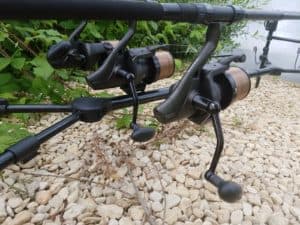
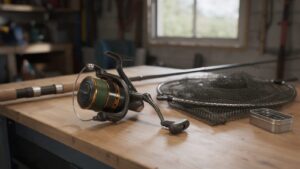
- Wipe them down with a damp cloth after every wet or muddy session, and dry them properly.
- Back off the drag when storing, so the washers are not compressed.
- Follow the maker’s advice on oiling and greasing. A light application in the right places is better than a heavy one.
- Check the bail arm, handle and line roller for wear. Our guide to big pit reels may help if one needs replacing.
Line
Line weakens with time and sunlight. Check it for nicks and rough patches, and replace it if there is any doubt. Many anglers change their main line at least once a season. A fresh spool is far cheaper than a lost fish.
Hooks and Rigs
- Check hook points. A dull or rusty point should be binned.
- Throw away any hooklinks that are kinked, frayed or discoloured.
- Store spare rigs flat and dry so they do not tangle. See how to stop rig tangles.
Nets, Mats and Slings
Rinse nets, mats and slings, and let them dry fully before packing. Damp kit that is left in a bag quickly goes mouldy and smells. Check for tears in the mesh and holes in the mat. Our carp care kit guide covers what to replace and when.
Bivvies, Bedchairs and Sleeping Bags
- Set the bivvy up in the garden or garage to dry it fully before storing.
- Clean zips and poles, and check seams and pegs.
- Air sleeping bags and store them loosely rather than compressed.
Electronics
Remove the batteries from bite alarms, head torches and lights before storage, to avoid leaks. Check the contacts and wipe away any moisture.
Bait
Leftover boilies, pellets and particles do not last forever. Our guide to storing and freezing baits explains what to keep and what to throw away.
A Simple Winter Checklist
- Wash and dry everything that has been wet or muddy.
- Check line, hooks and hooklinks, and replace what is worn.
- Service or oil reels as advised by the manufacturer.
- Dry the shelter, nets and mats fully.
- Remove batteries.
- Make a list of what to replace, so you are ready in spring. Our checklist of what to take is a handy starting point.
Read next:
- What to take carp fishing: the day checklist
- How to store and freeze boilies, particles and pellets
- The best carp care kit
Shane Stanford has fished for carp for over twenty years, in the UK and in France, and currently fishes a private syndicate water in West Sussex. He writes Fishing Again to put the things he learned the hard way into plain language: location and watercraft first, then bait, rigs and gear. He is straight about which kit he has actually fished and which he has assessed on specification, and says so on the page.