
Gear · Line · Updated September 2026
The Best Carp Fishing Line: Mono, Fluorocarbon and Braid
Six lines I trust, which breaking strain to spool, when fluorocarbon and braid earn their place, and how often to change it. The line is the only thing between you and the fish; it is worth getting right.
Daiwa Sensor has been on my reels for around fifteen years and I have no reason to change. The Gardner, Korda and ESP lines here are ones I know from the anglers around me and from spooling them for others; the fluorocarbon and braid are for specific jobs I use them for.
The short answer
Spool 15lb monofilament for most UK carp fishing. Daiwa Sensor is the line I have used for fifteen years and it costs £12 for a 1000m spool; Gardner GT-HD is the low-stretch upgrade if you want more feel at range; Korda SUBline is the one for weed, gravel and France. Use a fluorocarbon like Korda Kontour when you want the line pinned down and invisible, and a 20lb braid on the spod rod.

Best value mono
Daiwa Sensor
Soft, sensitive, abrasion resistant and absurdly cheap for 1000m. The line I have fished for fifteen years.

Best low-stretch mono
Gardner GT-HD
High-grade copolymer with reduced stretch and crisp feedback to the tip. I have never heard a bad word about it.

Best for weed and gravel
Korda SUBline
Dense, fast sinking and tough, without the wiry feel. The line for snaggy water and European fish.
Which breaking strain, and which type
15lb is the standard breaking strain for UK carp fishing and the one I fish. Drop to 12lb on clear, open lakes where you want a thinner line and longer casts; go up to 18lb or 20lb in heavy weed, near snags, or on waters with very big fish. The number is about what the line will survive against gravel bars and weed, not about the size of the fish; 12lb mono lands thirties every week.
Monofilament is the all-rounder: cheap, forgiving, stretchy enough to cushion a lunge, and easy to knot. Fluorocarbon is denser and near invisible, sinks fast and pins the last few yards to the bottom, at the cost of stiffness and price. Braid has no stretch and a tiny diameter for its strength, which makes it superb for feel and distance and hopeless as a main line on most waters, where it is banned.
On the spod rod, use braid. A 20lb spod braid in a bright colour cuts crack-offs, casts further and lets you hit the clip cleanly. My line explainer goes deeper into the three types; this page is about which spools to buy.
My spools
Mono, fluorocarbon or braid
The three types and what each is for. Most anglers need mono and a spod braid; fluorocarbon is a tool for particular waters.
Monofilament
A single strand of nylon. Cheap, abrasion resistant, stretchy enough to absorb a lunge, easy to dye and easy to knot. Floats or sinks slowly, so it is the line for surface fishing and poor for slack lines. The right main line for most anglers.
Fluorocarbon
Dense, so it sinks fast and lies flat on the bottom, and it bends light like water, so it is close to invisible. Stiffer, more expensive and less forgiving of poor knots. The line for spooky fish over clean bottoms and for slack-line fishing.
Braid
Multiple fibres woven together. No stretch, tiny diameter for its strength, superb feel and casting. Banned as a main line on most UK waters because of the damage a no-stretch line can do to a fish. The line for spod and marker rods, and for hooklinks where allowed.
Breaking strain
12lb for clear, open water. 15lb as standard. 18 to 20lb for weed, snags and very big fish. The strain protects against gravel and weed, not the weight of the fish.
Colour
Fish see line as a shape, not a colour, so match the bottom: brown for silt, green for weed, clear for clear water. Bright lines are for spod rods, where you want to see them.
Diameter and stretch
Thinner casts further and is less visible; thicker resists abrasion. Low-stretch lines give more feel at range and hit the clip harder; high-stretch lines cushion the fight. Pick the balance for your water.
The six lines, reviewed
Three main-line monos, a fluorocarbon, a spod braid and the mono I would give a beginner. Prices are per spool from Amazon in September 2026.
1. Best value mono
Daiwa Sensor 15lb
Fished with, around fifteen years
Sensor has been around for decades and on my reels for around fifteen years, so I am in a good position to review it. It is soft and sensitive, casts well for its diameter, knots reliably and has more abrasion resistance than a line this cheap has any right to. A 1000m spool at this money means you can change line every season without thinking about the cost, which is the best thing you can do for your fishing. It comes in brown and clear; I use brown on silty and weedy water.
Pros
- Absurdly good value
- Soft, knots well
- Reliable for fifteen years
- Enough on a spool for three reels
Cons
- Standard stretch, less feel at range
- Not the thinnest 15lb
Verdict: The line I fish and the one I would give a beginner. Buy a 1000m spool, fill three reels, and change it every spring.
Check price on Amazon2. Best low-stretch mono
Gardner GT-HD 15lb
I know a lot of anglers who fish GT-HD and I have never heard a negative word about it. It is a high-grade copolymer developed to set a new benchmark for low-stretch lines: crisp feel and clear feedback to the rod tip when the lead touches down, without giving up knot strength or abrasion resistance. If you fish at range, feel for the drop, or want to hit the clip hard and accurately, the reduced stretch is worth the extra over Sensor.
Pros
- Crisp feel at range
- High knot strength
- Abrasion resistant
- Low-vis colours
Cons
- More than twice the price of Sensor
- Low stretch is less forgiving under the tip
Verdict: The line to buy when you want more feel than Sensor gives. Assessed on the anglers around me rather than my own reels.
Check price on Amazon3. Best for weed and gravel
Korda SUBline 15lb
SUBline was built for the toughest conditions: heavy weed, gravel bars, snags and big European fish. It is dense, so it sinks fast and suits slack-line fishing, and it has the strongest knot strength and toughness of any mono here, without the stiff, wiry feel that tough lines usually carry. Anglers who spool it for the first time are surprised how supple it is. It comes in 10, 12, 15 and 20lb in green and brown, so you can match it to the water.
Pros
- Tough and fast sinking
- Strong knots
- Supple
- Four strains, two colours
Cons
- Shorter spools than Sensor
- Overkill on a clean, quiet lake
Verdict: The line for hard waters. If you fish weed and gravel, or you are heading to France, spool this.
Check price on Amazon
4. Best premium mono
ESP Syncro XT 15lb
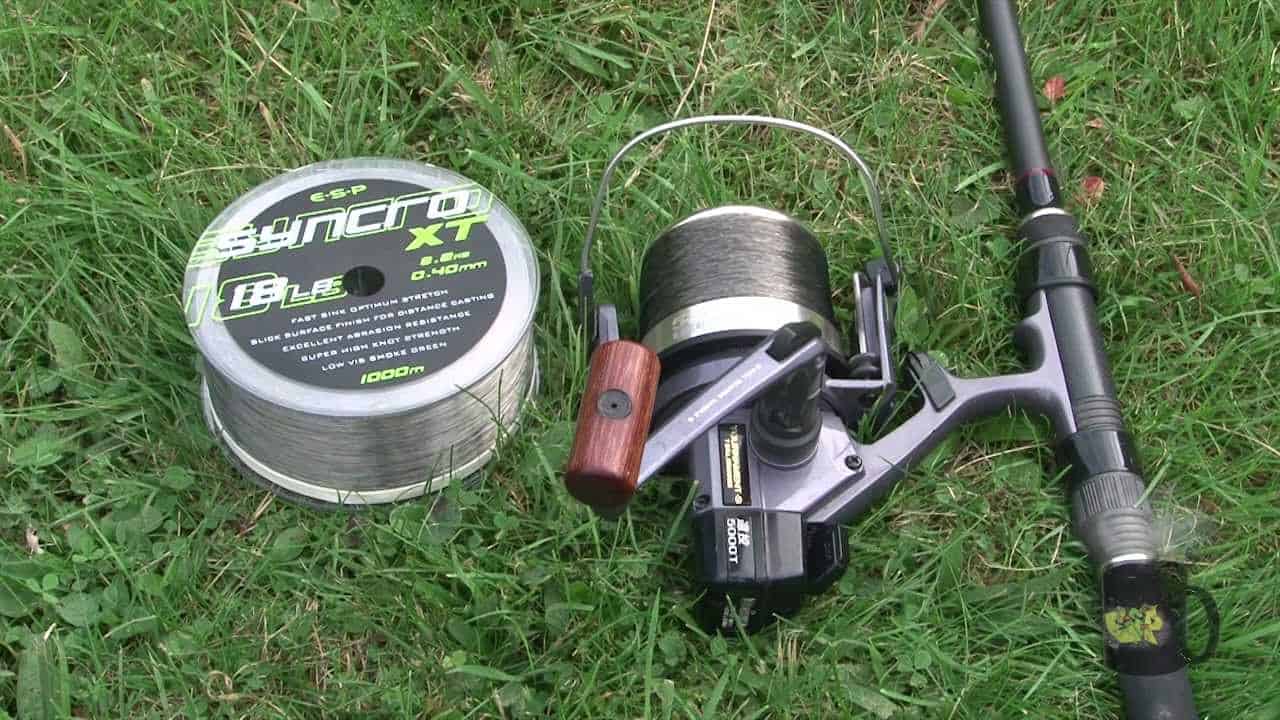
The line in the photo at the top of this page. Syncro XT is ESP’s premium mono: supple, consistent diameter, excellent knot strength and a sink rate between Sensor and SUBline. The Loaded version is pre-spooled for a reel in one purchase. It is the mono I would choose if I wanted something a step up from Sensor without the low-stretch character of GT-HD.
Pros
- Supple and consistent
- Strong knots
- Loaded option
Cons
- Twice the price of Sensor
- Not as tough as SUBline
Verdict: A premium all-rounder. Assessed on specification and on spooling it for others.
Check price on Amazon
5. Best fluorocarbon
Korda Kontour Fluorocarbon 15lb
Kontour is the fluorocarbon main line most UK carp anglers reach for, and for good reason: it sinks like a stone, lies flat on the bottom, and disappears in clear water. It is stiffer than mono, so it needs a careful knot and a spool that is not overfilled, and 200m does not go far, so it is a line for the water that needs it rather than a default. Over clean gravel and silt with cautious fish, and for slack lines, it makes a difference you can see.
Pros
- Invisible and pinned down
- Sinks fast
- Abrasion resistant
Cons
- Stiff
- Expensive per metre
- Needs careful knots and spooling
Verdict: The fluorocarbon to buy when the water calls for it. Not a default main line.
Check price on Amazon
6. Best spod braid
Fox Exocet MK2 Spod Braid 20lb
A dedicated spod braid in bright yellow that you can see in the air and against the water, so you can watch the spomb land on the spot and hit the clip cleanly every time. No stretch means the spomb goes further for less effort and empties where you aimed it. Use it with a shock leader and never on the fishing rods. It also does the job on a marker rod.
Pros
- Casts further
- Visible in flight
- Hits the clip cleanly
Cons
- Needs a shock leader
- Not for fishing rods
Verdict: The braid for the spod rod. A 20lb spool covers most spodding situations.
Check price on AmazonAll six side by side
| Line | Type | Strain | Spool | Sink | Price | Rating |
|---|---|---|---|---|---|---|
| Daiwa Sensor | Mono | 6 to 20lb | 1000m | Slow | ~£12 | 9.5 |
| Gardner GT-HD | Low-stretch copolymer | 8 to 20lb | 1000m | Medium | ~£30 | 9.5 |
| Korda SUBline | Dense mono | 10 to 20lb | Standard | Fast | ~£22 | 9 |
| ESP Syncro XT | Mono | 8 to 20lb | Standard or Loaded | Medium | ~£25 | 9 |
| Korda Kontour | Fluorocarbon | 12 to 20lb | 200m | Very fast | ~£24 | 9 |
| Fox Exocet MK2 Spod | Braid | 20lb | 300m | Floats | ~£30 | 9 |
Spooling, changing and looking after line
Good line fished badly loses fish. These are the habits that matter.
Spooling up
Soak new mono in warm water for ten minutes to soften the memory, then wind it on under tension through a damp cloth to within a couple of millimetres of the spool lip. Under-filled spools kill distance; over-filled spools throw loops.
Change it every year
Line tires: UV, stretch and abrasion weaken it over a season. Change it every spring, or strip 50m off the front after a season and carry on for a second year if you fish small waters and rarely cast far. Recycle the old line.
Check the last few yards
Run the last ten yards through your fingers after every fish and after every session on gravel. If it feels rough, cut it back. Most breaks happen in the last two rod lengths.
Knots
A good line with a bad knot is a bad line. Use the knots in my knots guide, wet them before pulling tight, and test every one.
Braid rules
Check the fishery rules before you spool braid. Most UK waters ban it as a main line and many ban it for hooklinks; almost all allow it on spod and marker rods.
Storage
Keep spools out of sunlight and away from heat, and do not store reels wet. A spool left on a dashboard for a summer is a spool of weak line.
Questions I get asked
What breaking strain for carp?
15lb for most UK fishing. 12lb on clear, open water for distance and stealth. 18 to 20lb in weed, near snags and for very big fish.
Can I fish braid as a main line?
Most UK fisheries ban it as a main line and increasingly as a hooklink, because a no-stretch line can damage fish during the fight. Check the rules. Spod and marker rods are the place for braid.
Does line colour matter?
A little. Match the bottom: brown for silt, green for weed, clear for clear water. Fish see the line as a shape more than a colour, so how it lies matters more than what colour it is.
How often should I change line?
Once a year for most anglers. If you fish small waters and rarely cast far, strip 50m off after a season and carry on.
Mono or fluorocarbon?
Mono as your default. Fluorocarbon when the water is clear, the fish are cautious and you want the line pinned down and invisible.
What line for a spod rod?
20lb braid in a bright colour with a shock leader. Never mono.
The verdict
Spool 15lb Daiwa Sensor and change it every spring; it is the line I have fished for fifteen years and a 1000m spool costs less than a bag of boilies. Step up to Gardner GT-HD if you want more feel at range, and to Korda SUBline for weed, gravel and France. Add Kontour fluorocarbon for the waters that need it and Fox Exocet braid on the spod rod.
Read next
Prices are indicative and change often. Buttons link to Amazon; as an Amazon Associate I earn from qualifying purchases. Read my affiliate disclosure and how I test.
Last Updated on September 10, 2026 by Shane Stanford
Shane Stanford has fished for carp for over twenty years, in the UK and in France, and currently fishes a private syndicate water in West Sussex. He writes Fishing Again to put the things he learned the hard way into plain language: location and watercraft first, then bait, rigs and gear. He is straight about which kit he has actually fished and which he has assessed on specification, and says so on the page.