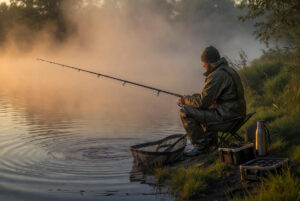
Watercraft is the single most valuable skill in carp fishing. You can have all the best gear, the finest bait, and the most technically perfect rigs in the world, but if you are fishing in the wrong spot, you will not catch. Understanding how to read a lake, identify where the carp are likely to be, and position yourself to intercept them is what separates consistently successful anglers from those who rely on luck.
In this guide, I am going to explain the fundamental principles of watercraft for carp fishing. I will cover how to find the fish, what features to look for in a lake, how weather and seasons affect carp behaviour, and how to put all this knowledge together to choose the right swim. This is the kind of knowledge that takes years to develop through experience, but understanding the basics from the start will give you a significant head start.
What Is Watercraft?
Watercraft is the angling term for the ability to read the water, understand the environment, and make informed decisions about where and how to fish. It encompasses everything from observing fish behaviour and identifying underwater features to understanding how weather, wind, and seasons influence where carp feed and rest.
Good watercraft is not magic or intuition. It is based on observation, experience, and an understanding of carp behaviour. Carp are creatures of habit, and they respond to their environment in predictable ways. By learning to read the signs that a lake gives you, you can dramatically improve your chances of finding and catching fish.
Signs of Carp Activity
Showing Fish
The most obvious sign of carp activity is seeing the fish themselves. Carp show in several ways, and each type of show tells you something different about what the fish are doing.
A rolling carp that breaks the surface and shows its back or flank before disappearing is usually a fish on the move. Rolling fish are often travelling between areas and may not be actively feeding in the spot where you see them. However, if you see multiple fish rolling in the same area over a period of time, it is a strong indication that there is something attracting them to that spot, possibly a food source or a comfortable resting area.
A jumping carp that leaps clear of the water is a dramatic sight but is not always a reliable indicator of where the fish are feeding. Carp jump for various reasons including dislodging parasites, clearing their gills, and general exuberance. A single jumping fish does not necessarily mean you should cast to that spot, but repeated jumping in one area is worth paying attention to.
Head and shouldering, where a carp pushes its head and shoulders out of the water as it porpoises across the surface, is often associated with feeding behaviour. Fish that are head and shouldering are typically moving between feeding areas or are actively searching for food in the upper layers of the water.
Flat spots on the surface, sometimes called swirls, are caused by a carp turning or changing direction just below the surface. These subtle disturbances are easy to miss but are one of the most reliable indicators of carp activity in your area. Train yourself to watch for them, especially in the early morning and late evening when the water surface is often calm.
Bubbles
When carp feed on the lakebed, they root through the silt and sediment, releasing trapped gases that rise to the surface as bubbles. Feeding bubbles are typically small, numerous, and appear in clusters that move slowly across the surface as the fish moves along the bottom. They are quite different from the random single bubbles that rise from decaying vegetation, which tend to be larger and appear in the same spot.
If you see a patch of bubbles appearing on the surface and slowly moving, there is a very good chance a carp is feeding below. This is one of the strongest signs of active feeding and is an area well worth casting to.
Coloured Water
When carp feed in shallow water or over a silty bottom, they stir up sediment that colours the water. These clouded patches are known as mudding up, and they are another reliable sign of feeding activity. A localised patch of coloured water in an otherwise clear lake is almost certainly caused by feeding fish and is well worth investigating.
Understanding Lake Features
Margins
The margins of a lake are the shallow areas close to the bank. Many anglers, especially beginners, overlook the margins in favour of casting to the middle of the lake, but this is a mistake. Carp regularly patrol the margins, particularly in the early morning, late evening, and during the night. The margins offer food, shelter, and warmth in the form of overhanging trees and bushes that drop insects and seeds into the water.
Some of the biggest carp you will ever catch will be caught just a rod length from the bank. Always check the margins before casting to the horizon, and do not be afraid to lower a rig into the edge if you see signs of fish.
Islands
Islands are fish magnets. The overhanging vegetation on an island provides cover and food, and the margins around an island are natural patrol routes for carp. Fishing tight to an island is one of the most effective tactics in carp fishing, and many anglers catch the majority of their fish by casting as close to the island as possible.
When fishing to an island, try to land your rig within a couple of feet of the island itself. The closer you can get, the better. Fish feel safe near the cover of the island and are more likely to pick up a bait that is presented right against the edge than one that is sitting in open water a few yards out.
Weed Beds
Weed is a natural feature of most lakes and is an important habitat for carp. Weed beds provide cover from predators, shelter from bright sunlight, and a rich source of natural food in the form of snails, insects, and crustaceans that live among the fronds. Carp will often be found in and around weed beds, particularly during the warmer months when weed growth is at its peak.
Fishing in or near weed requires careful rig placement. You want your rig to be presented on the edge of the weed or in a clear spot within the weed rather than buried deep in dense vegetation where the fish cannot find it. Using a pop-up or a critically balanced hookbait can help to keep your bait visible above the weed.
Gravel Bars and Plateaus
Gravel bars are raised ridges of hard gravel on the lakebed, and they are prime feeding areas for carp. The hard substrate provides a clean surface for presenting bait, and the natural food that accumulates on and around gravel bars attracts fish. Finding a gravel bar with a leading rod or by feel when casting is a valuable skill that will lead you to some of the best feeding spots in the lake.
When your lead lands on gravel during casting, you will feel a distinctive tap-tap-tap through the rod as the lead bounces over the stones. This is quite different from the soft thud of a lead landing in silt or the resistance of it dragging through weed. Learning to read these sensations through the rod is a key part of developing your watercraft.
Overhanging Trees and Snags
Overhanging trees and bushes provide shade, cover, and a steady supply of natural food in the form of caterpillars, beetles, and other insects that fall from the branches. Carp love to sit beneath overhanging trees, especially during hot, sunny weather when the shade offers relief from the heat.
Snags such as fallen trees, submerged branches, and man-made structures are areas where carp feel safe because they can hide among the cover. Fishing near snags can be very productive, but it requires strong tackle and fast reactions to prevent a hooked fish from reaching the safety of the snag.
How Weather Affects Carp Behaviour
Wind
Wind is one of the most significant weather factors in carp fishing. A warm southerly or south-westerly wind is generally considered the best for carp fishing because it warms the surface layers and pushes natural food items towards the downwind bank. Fishing in the teeth of the wind is a time-honoured carp fishing tactic that consistently produces results.
The reason fishing the windward bank works so well is that the wind creates currents in the lake that push microscopic food items, insects, and warm surface water towards the bank the wind is blowing into. Carp follow this food supply and will often be found in greater numbers on the windward bank than anywhere else on the lake.
Cold northerly and easterly winds are generally less productive for carp fishing, as they can chill the surface water and push carp into deeper, more sheltered areas of the lake. In these conditions, fishing the back of the wind or finding a sheltered area out of the worst of the wind can be more productive.
Air Pressure
Many experienced carp anglers pay close attention to air pressure as an indicator of fish feeding activity. Low pressure, which is associated with overcast, mild, and potentially rainy weather, is generally considered to be better for carp fishing. Carp tend to feed more actively when the pressure is low or falling.
High pressure, which brings clear skies and bright sunshine, can make carp fishing more difficult. Fish may move into deeper water or become less willing to feed on the bottom. Surface fishing with floating baits can be an excellent tactic during high-pressure conditions, as carp often bask near the surface in warm, sunny weather.
Temperature
Water temperature has a direct effect on carp metabolism and feeding activity. Carp are cold-blooded, which means their body temperature and metabolic rate are governed by the water around them. In warm water, carp are active, feed heavily, and are generally easier to catch. In cold water, their metabolism slows, they feed less frequently, and they can be much harder to tempt.
Understanding seasonal temperature patterns helps you adjust your tactics throughout the year. In summer, fish confidently with plenty of bait and expect the fish to be active throughout the day and night. In winter, scale everything back, use smaller, highly attractive hookbaits, and focus on the milder periods when the fish are most likely to feed.
Seasonal Watercraft
Spring
As the water warms in spring, carp begin to emerge from their winter torpor and start feeding more actively. They often move into shallower areas where the water warms more quickly, particularly bays and margins that receive direct sunlight. Spring is an exciting time to be on the bank because the fish are hungry after a lean winter and can be caught in good numbers.
Summer
Summer is peak feeding time for carp, and they can be caught from almost anywhere in the lake. Focus on features, wind direction, and the areas where you observe the most fish activity. Early mornings and late evenings are often the most productive times, although carp will feed throughout the day and night in summer.
Autumn
Autumn is widely regarded as the best time of year for big carp. The fish are feeding heavily to build up fat reserves for the winter, and they become less cautious as the need to eat overrides their normal wariness. Some of the largest carp of the year are caught in October and November.
Winter
Winter carp fishing is a challenge, but it can also be incredibly rewarding. Carp tend to group together in deeper, more sheltered areas of the lake where the water temperature is most stable. Finding these holding areas is the key to winter success, and a single fish from a cold winter session can feel as satisfying as a net full of fish in summer.
Putting It All Together
Watercraft is not a single skill but a combination of observation, knowledge, and experience that develops over time. Every session you fish teaches you something new about how carp behave, how they respond to conditions, and where they are likely to be found. Keep your eyes open, watch the water before you set up, and never assume that the fish are in the same spot as last time. The anglers who catch consistently are the ones who take the time to read the water and make informed decisions about where to fish, rather than simply setting up in the nearest comfortable swim and hoping for the best.
Last Updated on March 11, 2026 by Shane
I have made a lot of mistakes during my fishing sessions and don't want you to make the same mistakes. I've learned the hard way over 20 years of fishing most weekends, testing, tweaking, and testing again and now want to help you excel with your carp fishing.
If you need any help, you can reach me at Fishing Again's Facebook page