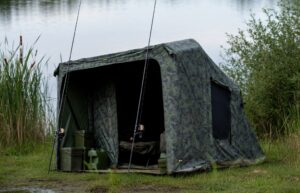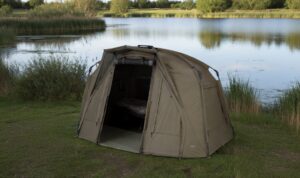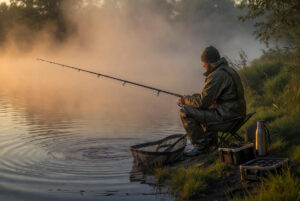
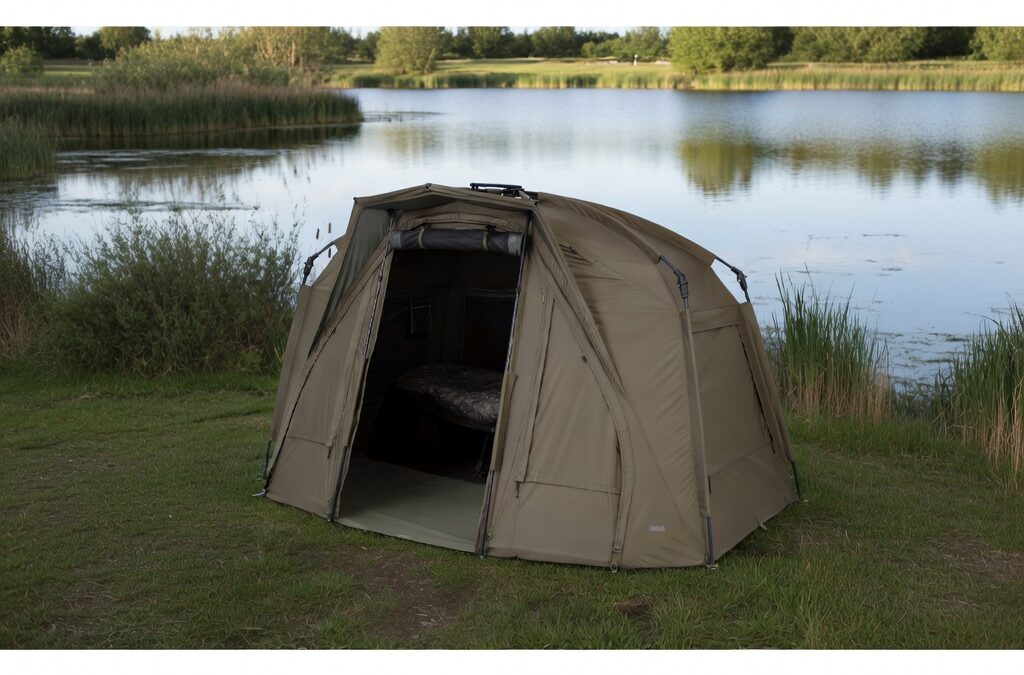
The Trakker Tempest RS 150 Bivvy is widely regarded as the benchmark 1-man carp fishing bivvy of its generation. When Trakker launched the RS (Rapid Shelter) range, they weren’t simply releasing a refreshed design — they were fundamentally rethinking how a modern carp bivvy should perform from the ground up. The result is a shelter that combines Trakker’s legendary quick-erect DNA with a generation’s worth of real-world user feedback, cutting-edge materials, and genuinely thoughtful engineering improvements.
In this in-depth review we’ll cover everything: the full technical specifications, every key feature explained in detail, how it sets up, how it performs in various weather conditions, all compatible accessories, who it’s best suited to, and how it compares to its predecessor and key rivals. Whether you’re debating between this and another premium bivvy, or simply want to understand exactly what makes the RS 150 so special before you invest, this guide covers it all.
Trakker Tempest RS 150 Bivvy — At a Glance
| Specification | Detail |
|---|---|
| Full Product Name | Trakker Tempest RS 150 Bivvy |
| Product Code | 201320 |
| Type | 1-Man Quick-Erect Bivvy |
| Waterproof Rating | 25,000mm Hydrostatic Head |
| Fabric | Multi-layer Aquatexx |
| Bivvy Weight | 11.2kg |
| Total Carry Weight (inc. pegs, quicksticks, bag) | 16.8kg |
| Height | 150cm |
| Width | 320cm |
| Depth | 230cm |
| Transport/Packdown Size | 141cm (L) × 25cm |
| Number of Vents | 6 (4 rear + 2 front) |
| Rod Straps | 2 magnetic |
| Storage Pockets | 4 internal mesh (2 with hanging points) |
| Included in Box | Groundsheet, clear window, quicksticks ×2, T-pegs, tension strap, heavy-duty carry bag |
| Frame | Black textured powder-coated anti-twist poles + GRP composite block |
| Hinge System | Rapid Knuckle System (patented) |
| RRP | £979.99 |
| Current Price (Angling Direct) | £879.99 |
The RS Range — What Does “RS” Actually Mean?
RS stands for Rapid Shelter. The name isn’t marketing fluff — it’s a direct reference to the single most important engineering advancement in the new range: the Rapid Knuckle System.
Every Trakker Tempest bivvy has always been built around a patented hinge block at its centre. This block is what allows the entire shelter to fan out from a compact transport size into its full erect state in a matter of seconds. With the original Tempest range, the setup process involved fitting the poles into the block individually and tightening them one by one. It was still fast by bivvy standards, but the RS range took a significant leap forward.
With the Rapid Knuckle System, all five main poles lock into position in a single, simultaneous action. You click the block open, fan out the poles, and lock them. Three steps, one fluid motion. Trakker describes it as: click, fan, lock. In practice, from arriving at your swim to having a fully erected bivvy you can step into, you’re looking at comfortably under 5 minutes — even in the dark, even on your own, even on uneven ground.
The updated GRP (glass reinforced plastic) composite block at the heart of the system is lighter than the machined aluminium blocks used in previous generations, yet measurably stronger and far more resistant to the fatigue cracking that occasionally plagued older blocks after years of repeated setup cycles. This is a significant durability improvement for anglers who fish frequently.
Aquatexx Fabric — Why 25,000mm HH Matters
The Trakker Tempest RS 150 is clad in Trakker’s own multi-layer Aquatexx material, rated to a 25,000mm hydrostatic head (HH). To put that in perspective:
| HH Rating | Description | Suitable For |
|---|---|---|
| 3,000mm | Basic waterproofing | Light showers only |
| 5,000–8,000mm | Entry-level bivvies | Short sessions, summer use |
| 10,000–15,000mm | Mid-range waterproofing | UK year-round, moderate rain |
| 20,000mm | Premium waterproofing | UK all-season, heavy rain |
| 25,000mm+ | Industry-leading waterproofing | Extended sessions, torrential rain, winter |
The 25,000mm rating on the Aquatexx fabric means you are operating in the highest tier of waterproof protection available on the mainstream carp bivvy market. In real-world terms, this means you can fish through sustained heavy UK rain — including the kind of prolonged downpours you get in October through March — without water penetrating the fabric. It also means that water beads and runs off the surface rather than soaking in, which dramatically extends the life of the fabric.
Aquatexx is not simply a single-layer coated fabric. It’s a multi-layer laminate construction, which means it’s breathable — an important quality that single-layer waterproof fabrics lack. Breathability allows moisture vapour from inside (your body heat, exhaled breath) to escape through the fabric rather than condensing on its inner surface. This doesn’t eliminate condensation entirely, but it significantly reduces it compared to non-breathable alternatives.
Trakker has also treated the Aquatexx on the RS range with a black-out pigment. This serves two purposes: it reduces solar UV penetration, which is the primary cause of waterproof fabric degradation over time, and it dramatically reduces the amount of light that passes through the fabric. Less solar energy penetrating the fabric means the interior of the bivvy stays measurably cooler on sunny days — a significant comfort benefit in summer.
Adaptive Ventilation — Six Vents, All Weather, Year-Round Comfort
Condensation management is one of the most underappreciated aspects of bivvy design, and it’s an area where the Trakker Tempest RS 150 makes a genuine step forward. The RS 150 features six adaptive ventilation vents — four positioned at the rear and two at the front — in what Trakker calls the Adaptive Ventilation system.
The key word is “adaptive.” These vents aren’t simply static mesh openings — they’re designed to function in multiple configurations:
Closed configuration: All vents sealed. Used in cold or wet conditions to maximise heat retention. Even with all vents closed, the Aquatexx fabric’s breathability continues to allow some moisture vapour to escape.
Standard open configuration: Vents open inward, allowing airflow through the shelter even in the rain. The vent geometry is designed so that rain does not enter through the vents when they’re in the standard open position — a critical feature for UK conditions where ventilation is needed even during rainfall.
Summer extended configuration (using Cool Guys): In warm conditions, the four rear vents can be pegged outward using the optional Trakker Tempest RS Cool Guys. This opens the rear of the bivvy much further, creating shade panels and dramatically increasing airflow. Trakker claims this configuration — particularly when combined with the optional Skull Cap — can reduce internal temperatures by several degrees compared to a sealed bivvy. On a warm August bank, this is not a trivial difference.
The front two vents operate similarly and, combined with the rear four, create cross-ventilation through the entire living space when needed. For winter fishing, you close the vents and rely on the fabric breathability and the optional Inner Capsule (sold separately) to manage condensation passively. For summer fishing, you can achieve near-complete airflow.
The Flat-Back Design
One of the most noticeable changes from the previous Trakker Tempest range to the RS is the significantly flatter rear profile. Earlier Tempest bivvies had a more dome-like shape with a rounded back. The RS 150 has a deliberately flattened rear wall.
Trakker describes this as striking “an optimal balance between internal storage space, the aerodynamics of the bivvy, and the ability to fit into swims.” That’s worth unpacking:
Internal space: A flat back creates usable vertical wall space that can be pushed closer to the bank or a wall behind the swim. It also means the floor area is more evenly distributed — less “wasted” curve at the back. The 150 size bivvy has a depth of 230cm, which comfortably accommodates a standard 195cm bedchair with room at the back for boots, a stove, or a tackle bag.
Aerodynamics: A flatter rear profile actually performs better in high winds than a rounded dome. The wind can flow around the shelter more predictably, and there’s less sail effect from a broad curved surface. Anglers who fish exposed banks, lakes with prevailing winds, or winter sessions will notice this as a stability benefit.
Swim compatibility: Many carp swims, especially on mature fisheries, have features (trees, bushes, steep banks) that make a large footprint difficult to manage. The flat back allows the bivvy to sit closer to the bank behind it without the curved rear catching on vegetation.
Built-In Front Peak
All Trakker Tempest RS Bivvies include a built-in front peak as standard — an important upgrade from earlier models where a peak was an accessory rather than a standard component. The peak serves several practical functions:
It creates a sheltered zone directly in front of the bivvy door — typically about 60–80cm of covered space extending beyond the door opening. Rain falling at a normal angle hits the peak rather than the door area, keeping the entrance and floor immediately in front of the bivvy significantly drier. This makes the difference between stepping into the bivvy without mudding the groundsheet and arriving home with a groundsheet that needs a full wash.
The peak also creates shade over the door opening. During summer fishing, this allows you to sit in the bivvy doorway without direct sun glare — useful for watercraft and watching your rods. In autumn, it extends your usable shelter zone for rigging up rods or sorting tackle without standing in the rain.
When combined with the optional Skull Cap accessory, the peak extends significantly further — we’ll cover the Skull Cap in the accessories section below.
Internal Storage and Organisation
The internal layout of the Trakker Tempest RS 150 is well thought out. Starting from the top, there are four internal mesh storage pockets: two standard mesh pockets positioned on the inner walls, and two larger pockets that include internal hanging points. These hanging points allow you to hang items from the pocket itself — useful for head torches, phones, and small accessories that you want to keep off the groundsheet.
The two magnetic rod straps are positioned on the front rib either side of the door opening. These are velcro/magnetic hybrid attachments that hold a rod butt or rest upright against the front pole — useful when you need to tie rigs, change end tackle, or answer a run without putting your rod on the ground. The magnetic element makes one-handed attachment easy even when your hands are wet or covered in bait.
The groundsheet supplied with the RS 150 is a quality heavy-duty item. It’s not a paper-thin afterthought — it has the weight and material quality to handle sustained use on rough ground, pegs, and abrasive bankside surfaces. The clear window (also included) can be fitted to the front panel to provide forward visibility without opening the door fully — a useful watercraft tool during rain.
The Poles and Frame
The five main ribs of the Trakker Tempest RS 150 are made from black textured powder-coated anti-twist aluminium. The powder-coating serves multiple purposes: it prevents corrosion, it reduces light reflection (important for bankside stealth), and it provides a tactile grip surface that allows you to handle and manipulate the poles confidently even in wet, cold conditions.
“Anti-twist” refers to a keying system built into the pole ends that prevents the poles from rotating within their joints. When a pole can twist slightly in its socket, you get micro-movement under load that, over time, wears both the pole end and the socket. Anti-twist pole ends significantly extend the service life of the frame — an important consideration for an item you’ll be erecting and packing down potentially hundreds of times over several years.
The pole diameter and wall thickness are engineered to balance weight and strength. Trakker could make the poles heavier and stronger, but at the cost of total carry weight. They could make them lighter, but at the cost of structural rigidity in high wind. The RS range represents Trakker’s current optimum point on that curve.
Setup Guide — Step by Step
Setting up the Trakker Tempest RS 150 is genuinely fast. Here is the complete process:
Step 1 — Select your spot. Orient yourself so the bivvy door will face the water. The flat back can sit against a bank or tree line if available.
Step 2 — Remove the bivvy from the carry bag. The RS 150 comes in an oversized carry bag specifically so repacking is easy — you don’t need to fight with a tight bag at the end of a wet session.
Step 3 — Locate the GRP block. The block is at the apex of the folded bivvy. Stand behind the folded structure with the block pointing upward.
Step 4 — Click and fan. Operate the Rapid Knuckle System to open the block. Fan the five poles outward from the block into their erect positions.
Step 5 — Lock. Lock all five poles into their positions simultaneously using the knuckle system. The bivvy should now be fully self-supporting in its dome shape.
Step 6 — Orient and peg. Walk around the bivvy, checking orientation and alignment. Begin pegging out the pegging loops at the base, working from front to back and alternating sides to keep tension even.
Step 7 — Tension. Use the supplied tension strap to add a final level of tautness to the fabric. This removes any flapping in the wind and improves waterproofing at the seams.
Step 8 — Storm poles. Fit the two quickstick storm poles into the front uprights if conditions are windy. These significantly increase wind resistance.
Step 9 — Groundsheet. Lay the groundsheet inside the bivvy. The Tempest RS 150’s internal dimensions (320cm wide × 230cm deep) comfortably accommodate a standard 195cm bedchair.
Total time from bag to fishing: typically 4–8 minutes for an experienced angler, 10–15 minutes for your first few setups.
Packing away follows the reverse sequence. The oversized carry bag is a genuine quality-of-life improvement — removing the need to roll, fold, and compress the bivvy into a tight carry bag is significantly less frustrating at the end of a wet or cold session.
Performance in Different Conditions
Winter / Heavy Rain
The 25,000mm HH Aquatexx fabric performs exceptionally in sustained rain. Seams are taped, and the tension strap system keeps the fabric taut to maximise water runoff. Close all six vents to maximise heat retention. The flat-back design resists wind well. The Inner Capsule accessory (sold separately) is strongly recommended for winter use — it creates a second skin inside the bivvy that dramatically reduces condensation drip and improves insulation.
Autumn / Mixed Conditions
The RS 150’s adaptive ventilation really earns its keep in autumn — when days can be warm enough to need ventilation but nights bring heavy dew and condensation risk. The ability to partially open the vents gives you precise control over airflow. The Skull Cap is a useful addition in autumn, extending the peak and improving insulation while still allowing venting.
Summer / Heat
The blackout pigment in the Aquatexx fabric is a genuine summer advantage, keeping the interior meaningfully cooler than unpigmented fabrics. Open all six vents and use the Cool Guys to peg out the rear four — this creates ventilated “wings” that provide shade and maximise airflow. Without the inner capsule fitted, the full interior space is available for airflow. In temperatures above 25°C, most anglers will also remove the groundsheet to allow ground airflow from below.
Wind
The flat-back RS profile handles wind significantly better than previous domed designs. Storm poles add a further level of resistance. For very exposed swims in gale conditions, pegging every available peg point (there are multiple around the base) and using the tension strap at maximum tension is recommended. The Trakker Tempest RS has been proven in very challenging conditions — this is a genuinely tough shelter.
Full Accessories Guide
One of the great strengths of the Trakker Tempest RS 150 is the depth of its accessories ecosystem. Unlike cheaper bivvies that have minimal accessory support, the RS 150 sits at the centre of a comprehensive system where each accessory genuinely adds functional value. Here is every compatible accessory, with specs and what it actually does:
Trakker Tempest RS 150 Bivvy Skull Cap — £184.99
The Skull Cap is the most popular accessory for the RS 150, and for good reason. It fits over the existing front peak of the bivvy, extending it significantly to create a much larger covered entrance area. Key benefits: extended rain protection over the door zone, additional shade in summer, and a twin-skin cavity above the door that reduces condensation drip at the peak. Made from the same 25,000mm HH Aquatexx material as the bivvy itself, with improved guttering that channels water out to the sides rather than allowing it to pool. Includes two additional magnetic rod straps and its own Aquatexx drawstring carry bag. Weight: 1.15kg. Packdown: 30cm × 13cm.
Trakker Tempest RS 150 Inner Capsule — £159.99
The Inner Capsule transforms the RS 150 from a single-skin shelter into a genuinely insulated twin-skin system. It’s a fully enclosed inner compartment that fits inside the bivvy, with a stitched-in groundsheet that raises the sleeping area off the bivvy’s own groundsheet. Made from breathable, brushed polyester that feels soft against your sleeping bag and doesn’t rustle when you move. Key features: eliminates condensation drip onto your bedchair and sleeping bag, dramatically improves thermal insulation (measurably warmer in cold conditions), keeps out rodents and insects, includes inner wall storage pockets and a rear power point access zip. Weight: 3.6kg. Packdown: 45cm × 18cm. Essential for winter fishing — strongly recommended for anyone fishing from October through to March.
Trakker Tempest RS 150 Social Cap — £399.99
The Social Cap is a substantial accessory that clips onto the front of the bivvy to create a large covered porch area. Think of it as a conservatory for your bivvy — a fully covered space in front of the door that’s large enough to sit in, store equipment, or accommodate a second angler during social sessions. Made from 25,000mm HH Aquatexx with the same black-out pigment. Twin side openings on the social cap can be rolled back or zipped closed. The Insect Panel can be zipped into the front of the Social Cap for added protection. Black powder-coated 16mm aluminium poles. Weight: 5.7kg. Packdown: 131cm × 16cm. When combined with the Skull Cap above the door, you create a seamless covered zone spanning the entire front of the bivvy — an exceptional all-weather outdoor living space.
Trakker Tempest RS 150 Bivvy Insect Panel — £119.99
A fine-mesh insect screen that fits into the front of the bivvy in place of the standard infill or clear window. Provides 360° insect protection while maintaining maximum airflow — the best summer configuration for hot nights when you want the door open but not to be bitten to pieces. Also compatible with the Social Cap, so you can have the Social Cap fitted with the Insect Panel in its front opening for a combined ventilated, insect-proof extended shelter.
Trakker Tempest RS Cool Guys — (available from Trakker)
A set of specialist guy ropes designed specifically for pegging out the four rear adaptive ventilation vents in the open/extended position. When the rear vents are pegged out with Cool Guys, they create four shade panels that dramatically increase airflow through the rear of the bivvy. This configuration combined with the Skull Cap reduces internal temperatures by several degrees. Essential for summer fishing in hot conditions.
Trakker Tempest RS 150 Bivvy Overwrap — £369.99
The Overwrap is a full outer cover that fits over the entire RS 150 bivvy, creating a second waterproof skin across the whole surface. It improves insulation by creating a large air cavity all around the bivvy, virtually eliminates condensation on the bivvy’s inner surface, and adds a second waterproofing layer for the most extreme conditions. An overwrap also means that in wet conditions you can pack away the bivvy dry (only the overwrap gets wet), saving considerable drying time at home. Made from Aquatexx with the matching RS material specification.
Trakker Tempest RS 150 Nitelife Vapour Shield — £119.99
A condensation-management accessory that attaches inside the bivvy at ceiling level. The vapour shield catches condensation droplets before they can fall onto your bedchair and sleeping bag — a specific problem on very cold nights when condensation forms rapidly. Works alongside (rather than replacing) the Inner Capsule for the ultimate condensation-free winter setup.
Accessories Cost Summary
| Accessory | Price | Priority | When to Buy |
|---|---|---|---|
| Skull Cap | £184.99 | ⭐⭐⭐⭐⭐ | Immediately — all seasons |
| Inner Capsule | £159.99 | ⭐⭐⭐⭐⭐ | Before first autumn/winter session |
| Insect Panel | £119.99 | ⭐⭐⭐⭐ | Before first summer session |
| Overwrap | £369.99 | ⭐⭐⭐ | For dedicated winter/expedition anglers |
| Nitelife Vapour Shield | £119.99 | ⭐⭐⭐ | Winter addition alongside Inner Capsule |
| Social Cap | £399.99 | ⭐⭐ | For social anglers / longer sessions |
| Cool Guys | TBC | ⭐⭐⭐⭐ | Before first summer session |
Trakker Tempest RS 150 vs Trakker Tempest 150 — What’s Changed?
Many anglers upgrading from the classic Trakker Tempest 150 to the RS version will want to know exactly what the premium price buys them. Here’s a direct comparison:
| Feature | Trakker Tempest 150 (original) | Trakker Tempest RS 150 (new) |
|---|---|---|
| Hinge Block Material | Machined aluminium | Advanced GRP composite |
| Setup System | Individual pole locking | Rapid Knuckle System (all-at-once) |
| Waterproof HH | 210D fabric | 25,000mm HH Aquatexx |
| Ventilation Vents | 2 rear vents | 6 adaptive vents (4 rear + 2 front) |
| Back Profile | Rounded dome | Flat back |
| Built-in Peak | Optional accessory | Standard included feature |
| Black-out Pigment | No | Yes |
| Internal Pockets | 2 pockets | 4 pockets (2 with hanging points) |
| Rod Straps | Velcro | Magnetic |
| Carry Bag | Standard size | Oversized heavy-duty NXG bag |
| Skull Cap Mount | Standard clip-on | Built-in Skull Cap mount points |
| Price (Angling Direct) | £474.99 | £879.99 |
The key upgrades that justify the price difference are: the Rapid Knuckle System (faster and easier setup), the significantly better waterproofing spec (25,000mm HH vs 210D), the six-vent adaptive ventilation system (vs two basic rear vents), and the flat-back design. These are not cosmetic upgrades — they represent a genuinely more capable, more comfortable shelter. Whether the price difference is worth it to you depends on how seriously you fish and how long you intend to keep the bivvy. For a long-term investment, the RS is clearly the better buy.
Trakker Tempest RS 150 vs Key Competitors
| Feature | Trakker Tempest RS 150 (£879.99) | Nash Titan T1 Camo Pro (£674.99) | Fox Frontier II X (£699.99) | Sonik AXS-V2 (£289.99) |
|---|---|---|---|---|
| Waterproof HH | 25,000mm ✅ | 20,000mm | 20,000mm | 16,000mm |
| Height | 150cm | 183cm ✅ | 140cm | 137cm |
| Setup Speed | ⭐⭐⭐⭐⭐ | ⭐⭐⭐⭐ | ⭐⭐⭐⭐ | ⭐⭐⭐⭐⭐ |
| Number of Vents | 6 ✅ | 4 panels | 4 | 3 rear |
| Vents accessible from inside | Yes ✅ | Via door only | Yes ✅ | Yes ✅ |
| Groundsheet included | Yes ✅ | Optional extra | Yes ✅ | Yes ✅ |
| Inner capsule included | No (sold separately) | Yes ✅ | No | No |
| Built-in peak | Yes ✅ | Yes ✅ | Yes ✅ | Yes ✅ |
| Black-out fabric treatment | Yes ✅ | No | Yes ✅ | No |
| Accessories ecosystem depth | Extensive ✅ | Good | Good | Limited |
| Price | £879.99 | £674.99 | £699.99 | £289.99 |
The Trakker RS 150 leads on waterproofing, vent count, accessories ecosystem depth, and setup innovation. It trails the Nash T1 on height (183cm vs 150cm) — if headroom is your priority, the Nash is genuinely unrivalled. On price, the Sonik AXS-V2 is a remarkable proposition at £289.99, though its overall spec and build longevity don’t match the Trakker for serious all-season use.
Pros and Cons
| ✅ Pros | ❌ Cons |
|---|---|
| Industry-leading 25,000mm HH waterproofing | Expensive at £879.99 (RRP £979.99) |
| Rapid Knuckle System — fastest professional-grade setup | Inner capsule not included, adds further cost |
| Six adaptive ventilation vents — best-in-class airflow control | 150cm height moderate for taller anglers (6ft+) |
| Flat-back design — improved stability and swim compatibility | Accessories ecosystem is premium-priced |
| Black-out Aquatexx pigment — cooler in summer, longer fabric life | 16.8kg total carry weight is significant |
| Built-in front peak as standard | |
| 4 internal storage pockets (2 with hanging points) | |
| 2 magnetic rod straps | |
| Comprehensive out-of-box accessories package | |
| Extensive compatible accessories ecosystem | |
| Oversized heavy-duty carry bag | |
| Proven Trakker build quality and long-term durability |
Who Is the Trakker Tempest RS 150 For?
The RS 150 is best suited to the serious to dedicated carp angler who fishes overnight or multi-night sessions and wants a shelter that will serve them year-round without compromise. Specifically, it excels for:
The all-season carper who fishes through autumn and winter. The 25,000mm HH waterproofing, adaptive ventilation system, and Inner Capsule compatibility make it the best-equipped standard 1-man bivvy for cold and wet conditions.
The frequent fisherman who sets up and packs down many times per year. The Rapid Knuckle System and oversized carry bag make the setup/packdown experience significantly less arduous than competitors.
The angler with kit who needs storage. The four internal pockets, magnetic rod straps, and generous 230cm depth give you the organisation options of a much larger shelter in a compact 1-man footprint.
The quality-conscious buyer who values long-term durability. Trakker’s build quality and the UV-resistant Aquatexx fabric mean this bivvy should last a decade or more with proper care.
It is less ideal for: very tall anglers who want to stand upright (consider the Nash Titan T1 at 183cm), anglers who fish on a very tight budget (the Sonik AXS-V2 at £289.99 is a better value starting point), or anglers who need maximum portability and fish short day sessions (the Nash Titan Hide at 6.5kg is more appropriate).
Frequently Asked Questions
Does the Trakker Tempest RS 150 come with a groundsheet?
Yes. The RS 150 is supplied with a quality groundsheet as standard. It’s a heavy-duty item suitable for sustained use on rough ground.
What’s the difference between the Skull Cap and the Inner Capsule?
These are two different accessories serving different purposes. The Skull Cap fits on the outside of the bivvy, extending the front peak for greater rain and sun protection at the door. The Inner Capsule fits inside the bivvy, creating a second interior skin that improves insulation and eliminates condensation drip onto your bedchair. Many serious carpers use both simultaneously for the best of both worlds.
Can I stand up inside the Trakker Tempest RS 150?
At 150cm (just under 5 feet) height, the RS 150 does not allow standing upright for most adults. You can sit comfortably on a standard bedchair and move around on your knees. If standing headroom is essential, the Nash Titan T1 Camo Pro at 183cm is a better choice.
Is the Trakker Tempest RS 150 suitable for winter fishing?
Yes — it’s one of the best-equipped standard 1-man bivvies for winter fishing. The 25,000mm HH waterproofing handles sustained heavy rain, and the adaptive ventilation can be fully closed to maximise heat retention. Adding the Inner Capsule significantly improves thermal performance and eliminates condensation drip. For the coldest conditions, the Overwrap adds a further insulation layer across the whole shelter.
How does the Rapid Knuckle System work exactly?
The Rapid Knuckle System is a updated version of Trakker’s patented central hinge block. In previous Tempest models, each of the five main poles had to be individually locked into the block. The RS system uses a single locking mechanism that simultaneously secures all five poles in one action. You open the block (click), splay the poles (fan), and engage the lock (lock). All five poles are secured in one motion rather than five separate operations.
Is finance available on the Trakker Tempest RS 150?
Yes. Angling Direct offers 0% APR interest-free finance on the RS 150, with payment terms from 6–36 months. A typical 9-month plan at £879.99 with a 5% deposit works out at approximately £92.88 per month. Check the Angling Direct product page for current finance options.
What is the difference between the standard and camo versions?
The Trakker Tempest RS 150 Camo Bivvy is identical in spec and functionality to the standard green version. The only difference is the camouflage pattern exterior finish. The camo version retails for £929.99 — approximately £50 more — and is also available from Angling Direct.
How long does it take to set up the Trakker Tempest RS 150?
An experienced angler who knows the bivvy well can be set up and fishing in approximately 4–5 minutes from opening the bag. Allow 10–15 minutes for the first few times while you familiarise yourself with the Rapid Knuckle System and pegging layout.
Verdict — Is the Trakker Tempest RS 150 Worth the Money?
The Trakker Tempest RS 150 is the most complete 1-man bivvy on the UK market. It leads the mainstream field on waterproof specification (25,000mm HH Aquatexx), offers the fastest and most reliable setup system available through the Rapid Knuckle System, and delivers exceptional all-season performance through its six-vent adaptive ventilation architecture. The flat-back design is a real improvement over previous generations in terms of swim compatibility and wind resistance, and the accessories ecosystem — from the Skull Cap to the Inner Capsule to the Social Cap — is the deepest of any bivvy currently available.
Is it expensive? Yes. At £879.99 (currently discounted from £979.99 at Angling Direct), it’s a significant investment. But quality camping and outdoor gear is always more cost-effective per use when it lasts. A Trakker bivvy, properly maintained, will serve you for 10+ years. Divided across 50 uses a year over 10 years, you’re looking at under £1.80 per session. For a piece of equipment that keeps you dry, comfortable, and rested — which directly impacts your enjoyment and effectiveness on the bank — that’s excellent value.
If your budget allows and you fish seriously, this is the bivvy to buy. Our recommendation is to pair it immediately with the Skull Cap (£184.99) and Inner Capsule (£159.99) — the full all-season package at approximately £1,220 — and you will have a shelter system that won’t need replacing for the foreseeable future.
View the Trakker Tempest RS 150 Bivvy at Angling Direct — £879.99
For a comparison of the RS 150 against the best alternative bivvies currently available, read our full Top 10 Carp Fishing Bivvies for 2026 guide.
Last Updated on March 13, 2026 by Shane
I have made a lot of mistakes during my fishing sessions and don't want you to make the same mistakes. I've learned the hard way over 20 years of fishing most weekends, testing, tweaking, and testing again and now want to help you excel with your carp fishing.
If you need any help, you can reach me at Fishing Again's Facebook page