Before you wet a line in any freshwater in England and Wales, you need a fishing licence. This is a legal requirement, not optional, and fishing without one can result in a fine of up to two thousand five hundred pounds. The good news is that getting a fishing licence is quick, affordable, and straightforward. In this guide, I will explain exactly what a fishing licence is, who needs one, how to get one, and answer the most common questions that beginners have about fishing licences in the UK.
What Is a Fishing Licence?
A fishing licence, officially called a rod fishing licence, is a legal permit issued by the Environment Agency that gives you the right to fish with a rod and line in freshwater in England and Wales. The money raised from fishing licence sales goes directly towards funding fisheries management, habitat improvement, fish stocking, enforcement against poaching, and other activities that benefit anglers and the aquatic environment.
The licence covers rod fishing in rivers, streams, drains, canals, ponds, lakes, and reservoirs in England and Wales. It is separate from any permission you need from the landowner or fishery to fish a particular water. So even if you have paid for a day ticket at a fishery, you still need a valid Environment Agency rod licence to fish legally.
Who Needs a Fishing Licence?
Anyone aged thirteen or over who wants to fish with a rod and line in freshwater in England and Wales needs a fishing licence. Children under thirteen can fish for free without a licence, although they must still have the permission of the fishery or landowner to fish on their water.
Young people aged thirteen to sixteen can get a free junior licence. This covers them for all types of freshwater fishing and does not cost anything, but it must still be obtained before fishing. Many parents do not realise this, so make sure your teenagers are covered before they head to the bank.
Adults aged seventeen and over need to purchase a licence, with the cost varying depending on the type of licence and duration. Senior anglers aged sixty-five and over are entitled to a discounted rate, and there are also concessions available for disabled anglers who receive certain benefits.
Types of Fishing Licence
Trout and Coarse Fish Licence
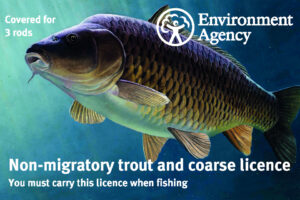
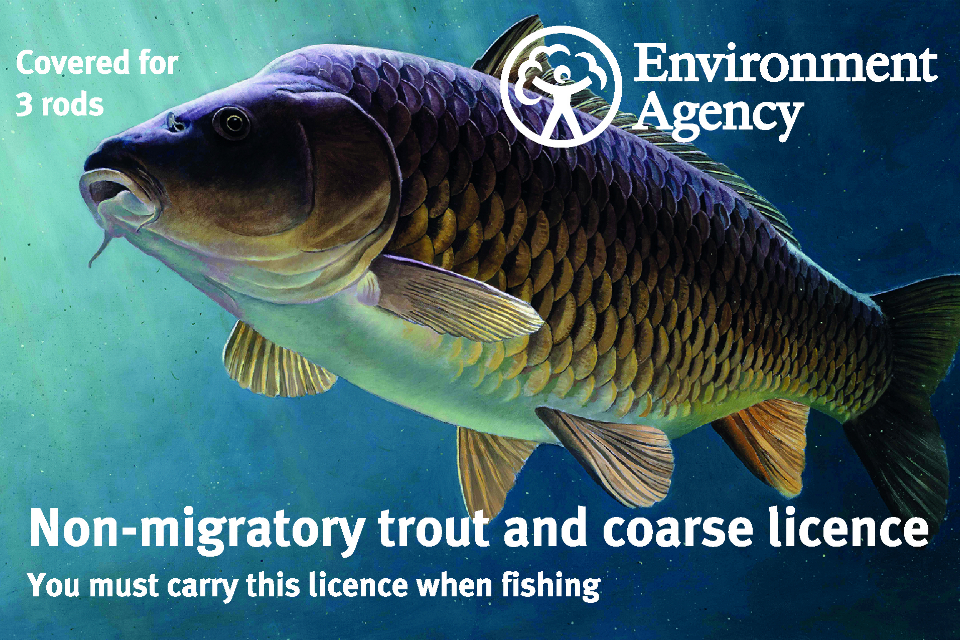
This is the licence that the vast majority of carp anglers need. It covers fishing for coarse fish, which includes carp, tench, bream, roach, perch, pike, and all other non-game freshwater species, as well as non-migratory trout. This is a two-rod licence by default, meaning it allows you to fish with up to two rods at the same time.
If you want to fish with three rods, which is common in carp fishing, you need to upgrade to a three-rod licence. This costs a little more but allows you to have three rods fishing simultaneously, which gives you more water coverage and a better chance of catching.
Salmon and Sea Trout Licence
This licence covers fishing for salmon and sea trout in addition to all coarse fish and non-migratory trout. Unless you are planning to fish for salmon or sea trout, you do not need this licence. It is more expensive than the coarse and trout licence and is primarily used by game anglers.
Duration Options
Fishing licences are available in three duration options: one day, eight days, and twelve months. The one-day licence is ideal if you only fish occasionally or if you want to try fishing before committing to a full licence. The eight-day licence is useful for a fishing holiday or a week of sessions. The twelve-month licence is by far the best value for anyone who fishes regularly, and it is what most carp anglers buy.
A full twelve-month two-rod trout and coarse licence currently costs thirty-three pounds and ninety pence for adults, and the three-rod upgrade adds a further amount on top. For the amount of fishing you can do in a year, this is outstanding value and works out at less than ten pence a day.
How to Buy a Fishing Licence
Online
The quickest and easiest way to buy a fishing licence is online through the government website at gov.uk. The process takes about five minutes and you will receive your licence confirmation by email immediately. You can start fishing straight away once you have your confirmation. This is the method I would recommend for most people as it is quick, convenient, and available twenty-four hours a day.
By Phone
You can also buy a fishing licence by calling the Environment Agency’s telephone service. The number is available on the government website, and an operator will take your details and process the licence over the phone. This option is useful for anyone who is not comfortable buying online.
At the Post Office
Fishing licences can be purchased over the counter at Post Office branches that offer the service. Not all Post Offices sell fishing licences, so it is worth checking with your local branch before making the trip. You will need to provide your personal details and pay the licence fee, and you will receive your licence on the spot.
What the Licence Covers
Your rod licence allows you to fish on any freshwater in England and Wales where you have the landowner’s or fishery’s permission. It does not give you automatic access to any water. Most fisheries require you to buy a day ticket or hold a membership to fish, and many rivers and canals require you to hold a club membership or purchase a separate permit.
The licence is personal to you and cannot be transferred to anyone else. It covers you for the type of fishing specified on the licence, so if you have a trout and coarse licence, you can fish for any coarse fish or non-migratory trout. If you want to fish for salmon or sea trout, you need the salmon and sea trout licence.
Fishing Licence Rules and Regulations
Rod Limits
A standard trout and coarse licence allows you to fish with up to two rods at the same time. If you want to use a third rod, you must purchase the three-rod upgrade. Using more rods than your licence permits is an offence and can result in a fine. Most carp fisheries allow a maximum of three rods per angler, but some restrict you to two, so always check the venue rules.
Close Seasons
There is a statutory close season for coarse fishing on rivers and streams in England and Wales, which runs from the fifteenth of March to the fifteenth of June inclusive. During this period, you are not allowed to fish for coarse fish on any river, stream, or drain. This close season exists to protect fish during their spawning period and is strictly enforced.
The close season does not apply to most stillwaters, which means you can fish on lakes and ponds all year round. However, some individual fisheries choose to observe a close season on their stillwaters, so always check with the fishery before planning a session during the close season period.
Carrying Your Licence
You must be able to produce your fishing licence or a proof of purchase if asked by an Environment Agency enforcement officer. This means you should either carry your physical licence with you or have a digital copy on your phone. Enforcement officers regularly visit fisheries and riverbanks, and not being able to produce a valid licence when asked is an offence.
If you buy your licence online, I recommend taking a screenshot of your confirmation email and saving it on your phone so that you always have proof available, even if you do not have phone signal at the waterside.
What Happens If You Fish Without a Licence?
Fishing without a valid licence is a criminal offence in England and Wales. If you are caught by an Environment Agency enforcement officer, you can be prosecuted and fined up to two thousand five hundred pounds. The Environment Agency takes licence enforcement seriously and regularly prosecutes offenders.
Beyond the legal consequences, fishing without a licence is harmful to the sport because the money from licence sales funds essential fisheries work. Every angler who fishes without a licence is effectively taking from the sport without contributing to its upkeep. Do the right thing and buy a licence before you fish.
Fishing in Scotland and Northern Ireland
It is important to note that the rod licence system described above applies to England and Wales only. Scotland and Northern Ireland have different regulations.
In Scotland, you do not need a rod licence to fish for coarse fish. However, you do need permission from the landowner or fishery to fish on any water, and you need a permit to fish for salmon and sea trout. The regulations are managed by local district salmon fishery boards and fishery trusts rather than a national body.
In Northern Ireland, fishing is managed by the Department of Agriculture, Environment and Rural Affairs, and you need a rod licence and a permit to fish on most waters. The regulations and costs are different from those in England and Wales, so if you are planning to fish in Northern Ireland, check the current requirements before you go.
Day Tickets and Club Memberships
As I mentioned earlier, a rod licence alone does not give you the right to fish on any water. You also need permission from whoever controls the fishing rights. On most stillwater fisheries, this means buying a day ticket when you arrive, which typically costs between five and fifteen pounds depending on the venue.
Many rivers, canals, and some lakes are controlled by angling clubs, and you need to be a member of the club to fish these waters. Club memberships vary in price from a few pounds a year for local clubs to several hundred pounds for prestigious venues with good-quality fishing. Joining an angling club is often the best value way to access a wide range of waters, as many clubs control multiple venues for a single membership fee.
Final Thoughts
Getting a fishing licence is one of the first things you should do when you decide to take up fishing. It is cheap, easy to obtain, and it is the law. The money you pay goes towards protecting and improving the fisheries that you enjoy, so think of it as an investment in your sport. Buy your licence, respect the rules, and enjoy the incredible fishing that the UK has to offer. And remember, when that bailiff asks to see your licence on the bank, you will be glad you have it.
Last Updated on March 11, 2026 by Shane
I have made a lot of mistakes during my fishing sessions and don't want you to make the same mistakes. I've learned the hard way over 20 years of fishing most weekends, testing, tweaking, and testing again and now want to help you excel with your carp fishing.
If you need any help, you can reach me at Fishing Again's Facebook page