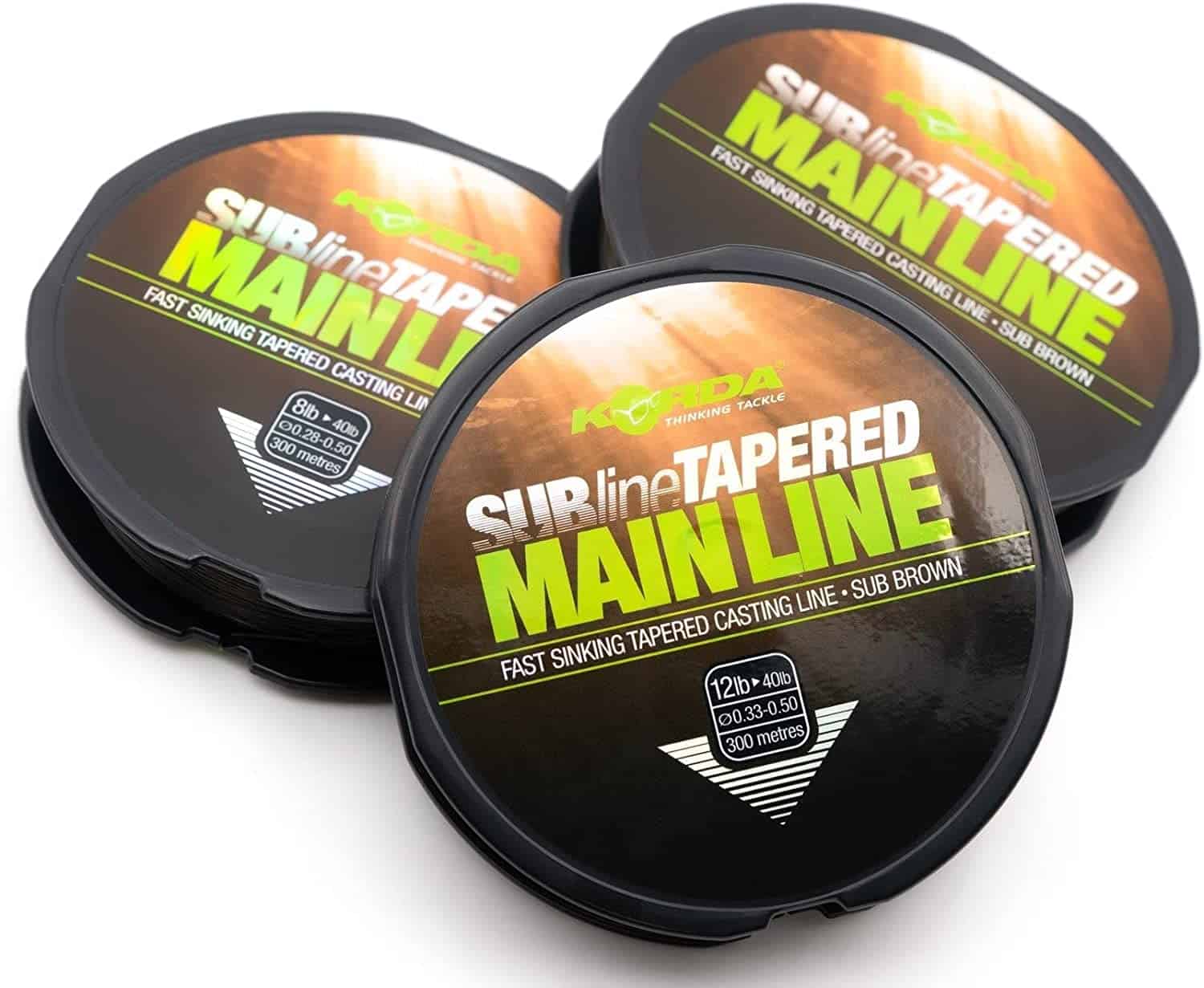
Your fishing line is the only physical connection between you and the fish, which makes it one of the most important components in your entire carp fishing setup. Choose the wrong line and you could be dealing with constant tangles, poor casting, and heartbreaking line breaks at the worst possible moment. Choose the right line and you will have the confidence to cast accurately, present your rig effectively, and land every fish that picks up your bait.
There are three main types of fishing line used in carp fishing: monofilament, fluorocarbon, and braided line. Each has its own strengths and weaknesses, and understanding these will help you pick the right line for the situations you are most likely to encounter on UK waters. In this guide, I will break down everything you need to know about each type and help you decide which one to spool up for your next session.
Monofilament Line
Monofilament, commonly known as mono, is the most widely used type of fishing line among carp anglers in the UK and around the world. It is made from a single strand of nylon that is extruded into a line of consistent diameter. Mono has been around for decades and remains the go-to choice for the majority of carp anglers, from complete beginners to seasoned specimen hunters.
Advantages of Monofilament
One of the biggest advantages of monofilament line is its stretch. Mono typically stretches by around ten to fifteen percent of its length, which acts as a built-in shock absorber during the fight. This stretch is incredibly forgiving, cushioning the sudden lunges and powerful runs that carp are famous for. For beginners especially, this forgiveness can be the difference between landing a fish and losing it, because the stretch compensates for imperfect clutch settings and delayed reactions.
Mono is also very easy to manage on the spool and when casting. It has a relatively smooth, round profile that flows off the spool cleanly, and it does not require any special knots beyond the standard ones that any angler can learn in a few minutes. Tangles, while still possible, are less frequent with mono than with braid, and when they do occur, they are generally easier to untangle.
Another major advantage is cost. Monofilament line is the most affordable of the three types, which makes it the obvious choice for beginners who are building their setup on a budget. You can get a quality spool of carp mono for under ten pounds, which will fill multiple reels.
Disadvantages of Monofilament
The stretch that makes mono so forgiving also has a downside. Over long distances, the stretch in the line can make bite detection less sensitive, as the initial movement of a fish picking up the bait is absorbed by the line before it registers on your alarm or bobbin. This is rarely a problem at normal fishing distances, but it can become an issue at extreme range.
Monofilament also has memory, which means it retains the shape of the spool it is wound on. When you cast, the line can come off in coils rather than flowing freely, which reduces casting distance and can cause tangles. This is more of a problem with cheaper, stiffer mono and less of an issue with premium lines that are specifically designed to have low memory.
Finally, mono degrades over time, particularly when exposed to UV light and water. You should change your main line at least once a season, and more frequently if you fish regularly. Fishing with degraded line is false economy because the line will be weaker than its stated breaking strain and could fail at a critical moment.
Recommended Breaking Strain
For general carp fishing on UK waters, a monofilament main line of 12lb to 15lb breaking strain is the standard recommendation. 12lb is fine for open water fishing on commercial fisheries where snags are not a concern. If you are fishing near snags, weed, or other hazards, step up to 15lb for the extra insurance. Some anglers fishing very snaggy waters may go even heavier, but for most situations, 12lb to 15lb covers everything you need.
Fluorocarbon Line
Fluorocarbon is a line made from polyvinylidene fluoride, a material that has some unique properties that make it interesting for carp fishing. While it looks similar to monofilament, it behaves quite differently in several important ways.
Advantages of Fluorocarbon
The headline feature of fluorocarbon is its refractive index, which is very close to that of water. In practical terms, this means that fluorocarbon line is much less visible underwater than monofilament. On clear, pressured waters where carp have learned to associate visible line with danger, this near-invisibility can be a genuine advantage.
Fluorocarbon also sinks faster than mono, which is useful because it means your line lies flat on the lakebed rather than hanging in the water column. This improves your rig presentation by keeping the line pinned down and out of the way of feeding fish. Many experienced carp anglers swear by fluorocarbon for this reason alone, as good line lay can make a significant difference on hard-fished waters.
Another advantage is that fluorocarbon is virtually immune to UV degradation, which means it lasts longer than mono. It also absorbs very little water, so its properties remain consistent throughout a session regardless of how long it has been submerged.
Disadvantages of Fluorocarbon
Fluorocarbon has less stretch than monofilament, typically around five to eight percent. While some anglers see this as an advantage for improved bite detection, it does mean that fluorocarbon is less forgiving during the fight. You need to have your clutch set more precisely, and your technique for playing fish needs to be a bit more refined to avoid hook pulls.
Fluorocarbon is also stiffer than mono of the same breaking strain, which can cause casting issues, particularly on smaller reels. The stiffer nature means it is more prone to springing off the spool and can be harder to manage, especially in cold weather when the material becomes even more rigid.
The biggest disadvantage for many anglers is the price. Fluorocarbon is significantly more expensive than monofilament, often two to three times the price for the same length. This makes it a harder sell for beginners who are already spending money on rods, reels, and terminal tackle.
Is Fluorocarbon Worth It for Beginners?
My honest recommendation for beginners is to start with monofilament and consider fluorocarbon later when you have more experience and are fishing waters where its low visibility and sinking properties would genuinely make a difference. On most commercial fisheries and day-ticket waters, good quality mono will serve you just as well as fluorocarbon at a fraction of the cost.
Braided Line
Braided line, or braid, is made from multiple strands of synthetic fibre woven together to create a line that is extremely thin for its breaking strain and has virtually zero stretch. Braid has a dedicated following among carp anglers, but it is also the most divisive type of line, with strong opinions both for and against its use.
Advantages of Braided Line
The most significant advantage of braid is its complete lack of stretch. This means that bite indication is incredibly sensitive, with even the slightest movement at the business end being transmitted directly to your alarm and bobbin. If you are fishing at extreme range, this zero stretch can be a game-changer for detecting shy bites that would be absorbed by the stretch in mono or fluorocarbon.
Braid is also much thinner than mono of the same breaking strain, which means you can fit more line on your spool. This is particularly useful for long-range fishing where you need to carry a lot of line. The thin diameter also means less resistance in the water, which can improve casting distance and reduce the bow in your line caused by currents and wind.
Another advantage is durability. Braid does not degrade in UV light and does not absorb water, so it maintains its strength over a longer period than monofilament. A good quality braid can last for several seasons with proper care, which can offset the higher initial cost.
Disadvantages of Braided Line
The zero stretch that makes braid so good for bite detection also makes it very unforgiving when playing fish. Every lunge and head shake is transmitted directly through the line with no cushioning, which puts more strain on the hook hold and increases the risk of hook pulls. Playing fish on braid requires a softer, more sympathetic rod action and a well-set clutch to compensate for the lack of give in the line.
Braid is also more visible in water than mono or fluorocarbon, which is why many anglers who use braid as a main line combine it with a monofilament or fluorocarbon leader near the rig. This adds complexity to the setup and another knot that could potentially fail.
Management on the spool can also be tricky with braid. If you do not keep tension on the line at all times, braid can bed into itself on the spool, causing nasty tangles that can take ages to sort out. Wind knots are also more common with braid and are much harder to untangle than with mono because the thin, supple line tends to cinch down tightly.
Many UK fisheries have rules regarding the use of braid. Some waters ban it entirely, while others allow it only with a leader of a minimum length. Before spooling up with braid, always check the rules of the waters you plan to fish.
Is Braid Suitable for Beginners?
In most cases, I would not recommend braid for a complete beginner. The lack of stretch, the management challenges, and the potential fishery restrictions make it a more advanced choice that is best explored once you have built up your confidence and technique with mono. There are certainly situations where braid excels, but for learning the fundamentals of carp fishing, monofilament is a far more forgiving and practical option.
Line Colour – Does It Matter?
Carp fishing lines are available in a wide range of colours, from clear and green to brown, dark camouflage, and even high-visibility options. The colour you choose should be based on the type of water you are fishing.
Green line works well over weedy or silty lakebeds where it blends in with the natural surroundings. Brown line is a good choice over gravel or clay bottoms. Clear line is the most versatile option and works reasonably well in most conditions. Some anglers prefer dark-coloured lines because they are easier to see above the water, which helps with casting accuracy and spotting your line on the surface.
For beginners, a green or dark green monofilament is a solid all-round choice that will work well on the majority of UK waters. Do not overthink the colour choice at this stage, as it is far less important than using the correct breaking strain and keeping your line in good condition.
How Often Should You Change Your Line?
This is a question that many beginners forget to ask, but it is an important one. Fishing line does not last forever, and using old, degraded line is one of the most common causes of lost fish. Monofilament should be changed at least once a season, or more frequently if you fish regularly or notice any signs of damage such as abrasion, kinks, or a loss of suppleness.
After every session, run your fingers along the last few metres of line to check for any rough spots or nicks that may have been caused by contact with gravel, snags, or the fish itself. If you find any damage, cut back past the damaged section before your next cast. This simple habit can prevent a lot of heartbreak on the bank.
Fluorocarbon lasts longer than mono and may not need changing as frequently, but you should still inspect it regularly. Braid has the longest lifespan, but even braid will eventually show signs of wear, particularly at the knots and near the leader connection. Replace your braid when you notice any fraying or loss of colour in these areas.
Putting It All Together
For a beginner carp angler in the UK, the choice is straightforward: start with a good quality monofilament line in the 12lb to 15lb range. It is affordable, forgiving, easy to manage, and will perform well in the vast majority of fishing situations you will encounter. Once you have built up your experience and confidence, you can experiment with fluorocarbon and braid to see if they offer benefits for the specific waters and situations you fish.
Whatever line you choose, look after it. Check it regularly, change it when it shows signs of wear, and always make sure your spool is loaded to the correct level. Your line is your lifeline to the fish, and looking after it is one of the simplest things you can do to improve your catch rate and avoid those gut-wrenching moments when a big fish slips away because of a line failure.
Last Updated on March 11, 2026 by Shane
I have made a lot of mistakes during my fishing sessions and don't want you to make the same mistakes. I've learned the hard way over 20 years of fishing most weekends, testing, tweaking, and testing again and now want to help you excel with your carp fishing.
If you need any help, you can reach me at Fishing Again's Facebook page