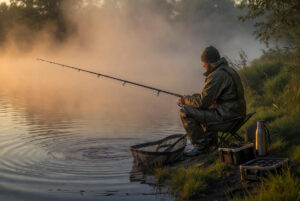
Carp fishing is a shared pursuit, and the waters we fish are shared spaces. How you conduct yourself on the bank affects not only your own experience but the experience of every other angler around you. Good bankside etiquette is not just about being polite. It is about respecting the fish, the environment, and the other anglers who share the same passion as you.
In this guide, I am going to cover the unwritten rules of carp fishing etiquette that every angler should know. Whether you are a complete beginner heading to the bank for the first time or someone who has been fishing for years, it is always worth being reminded of the standards that keep our sport enjoyable for everyone. Some of these rules are backed by fishery regulations, while others are simply common courtesy, but all of them are important.
Respecting Other Anglers
Choosing Your Swim
When you arrive at a lake, take the time to walk around and see which swims are occupied before deciding where to set up. Never set up directly next to another angler if there are other swims available further away. Everyone appreciates their space on the bank, and cramming yourself into the swim next door when there are empty swims available is one of the quickest ways to make enemies.
If the lake is busy and you need to fish close to another angler, introduce yourself and ask if they mind. A simple greeting and a brief conversation can make the difference between a friendly session and an uncomfortable one. Most anglers are perfectly happy to have company as long as you ask rather than just plonking yourself down without a word.
Casting and Water Space
Every angler is entitled to a reasonable amount of water in front of their swim. Casting into another angler’s water, or across their lines, is one of the biggest no-go areas in carp fishing. Before you cast, take a moment to consider where your neighbour’s rigs might be and make sure your cast does not encroach on their water.
If you are unsure about the boundaries, ask. A quick conversation along the lines of, “Are you fishing to the left or right?” clears up any ambiguity and prevents conflict. Most anglers will happily tell you where their rigs are and will appreciate you asking rather than finding out the hard way when your lines cross.
Noise
Excessive noise on the bank is one of the most common complaints among carp anglers. Playing loud music, shouting to your mates, slamming car doors at three in the morning, and general rowdiness are all deeply unwelcome on a fishing lake. Sound carries across water, and what seems like a normal conversation volume to you can be clearly audible to anglers on the opposite bank.
This does not mean you have to sit in total silence. Carp fishing is a social activity and quiet conversation, laughter, and normal activity are all part of the experience. But be mindful of others, especially during the night and early morning when people are trying to sleep. Keep your mobile phone on silent, keep your alarm tones at a sensible volume, and save the celebrations for the pub afterwards.
Walking Behind Rods
When walking around the lake, always walk behind other anglers’ rod setups, never in front. Walking between an angler’s rods and the water can spook fish that are feeding in the margins, trip over buzzer bars and rod pods, and is generally considered disrespectful. If there is no way to walk behind without going through dense vegetation, alert the angler and ask the best way to pass.
Respecting the Fish
Carp Care Equipment
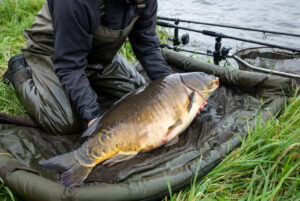
Carrying proper carp care equipment is not optional. It is a fundamental responsibility that comes with the privilege of catching these incredible fish. At a minimum, you should have an unhooking mat, forceps or a disgorger, and a carp care antiseptic treatment in your tackle bag. Many fisheries insist on a minimum mat size, so check the rules before you go.
Always wet your unhooking mat before placing a fish on it, and never lay a carp on bare ground, concrete, or gravel. The mucous membrane that covers a carp’s body is its first line of defence against infection, and contact with abrasive surfaces damages this layer and exposes the fish to disease.
Handling Fish
Handle every carp as if it is the most valuable fish in the lake, because to someone, it probably is. Support the fish properly at all times, keeping it low to the ground over the unhooking mat. Never hold a fish up by the gill plates, and never carry a fish by gripping it around the middle without support underneath.
Wet your hands before touching a fish to avoid removing the protective mucous layer. If you need to move a fish from the net to the unhooking mat, do it quickly and carefully, keeping the fish close to the ground at all times. A carp that kicks free from waist height can suffer fatal injuries, and there is no excuse for taking that risk.
Keep Fish in the Water
Minimise the time any fish spends out of the water. Prepare everything you need before you lift the fish from the net: have your scales zeroed, your camera ready, and your unhooking mat wetted and in position. The entire process of unhooking, weighing, photographing, and treating should take as little time as possible.
Never retain a fish in a landing net for an extended period so that a friend can come and take photos. If your camera is not ready, return the fish and catch it again another time. The fish’s welfare is more important than your photograph, always.
Returning Fish Safely
When returning a fish, hold it in the margins until it has fully recovered and is ready to swim away under its own power. Do not throw the fish back or release it into water that is too shallow for it to swim upright. In warm weather, when dissolved oxygen levels may be low, take extra care and hold the fish for longer, gently moving it back and forth to push water over its gills.
Respecting the Environment
Take Your Litter Home
This should go without saying, but unfortunately, litter on the bankside remains a significant problem at many fisheries. Every piece of rubbish you bring to the lake should leave with you. This includes food wrappers, empty bait packaging, discarded line, broken tackle, cigarette butts, and anything else that is not part of the natural environment.
Discarded fishing line is particularly dangerous because it can entangle wildlife, including birds, otters, and even the fish themselves. Always take your old line home and dispose of it responsibly. Many tackle shops have recycling bins for used fishing line.
Do Not Damage the Banks
Avoid cutting vegetation, digging into banks, or altering the environment around your swim. Many fisheries spend significant amounts of money maintaining their banks, planting vegetation, and managing the habitat around the lake. Cutting down branches for firewood, trampling marginal plants, or digging holes for bankstick placement damages this environment and degrades the experience for everyone.
If your swim is overgrown, speak to the fishery owner or bailiff rather than taking matters into your own hands. They may be happy for you to trim a few branches, or they may have good reasons for leaving the vegetation as it is.
Barbecues and Fires
Most fisheries prohibit open fires and some also restrict barbecues. Even where they are allowed, exercise extreme caution. A bankside fire can quickly get out of control, especially during dry summer months, and can cause enormous damage to the environment and neighbouring wildlife. Always use a raised barbecue rather than lighting a fire directly on the ground, and never leave it unattended.
Fishery Rules
Read and Follow the Rules
Every fishery has its own set of rules, and you are expected to know and follow them. These rules typically cover things like the number of rods allowed, minimum net and mat sizes, bait restrictions, barbless or barbed hooks, keepnet policies, and opening and closing times. The rules are there for good reasons, usually the protection of the fish stock and the enjoyment of all anglers, and ignoring them can get you banned.
Most fisheries display their rules at the entrance, in the tackle shop, or on their website. Read them before you fish, and if you are unsure about anything, ask the bailiff or fishery owner. Claiming ignorance of the rules is not an acceptable excuse for breaking them.
Paying Your Way
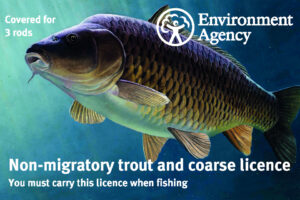
Pay your day ticket or membership fees honestly and promptly. Sneaking onto a water without paying is theft, and it takes money away from the fishery that would otherwise be used for stocking, maintenance, and improvements that benefit all anglers. If you cannot afford the ticket price, find a cheaper water or save up until you can. There is no excuse for fishing without paying where a fee is required.
Respecting the Bailiff
Bailiffs are there to enforce the rules, protect the fish, and ensure that everyone has a fair and enjoyable experience. They are not the enemy. Treat them with respect, show your licence and ticket when asked, and follow their instructions without argument. Most bailiffs are anglers themselves and are happy to chat, share local knowledge, and help you have a better session.
Social Media and Photography
In the age of social media, it is worth mentioning a few points about sharing your catches online. Always handle fish carefully and quickly when taking photos, and never hold a fish out of water for longer than necessary to get the perfect shot. A photo of a healthy, well-handled fish is far more impressive than a dramatically posed shot that has clearly stressed the animal.
Be mindful about sharing the exact location of your catches, particularly on syndicates and low-stock waters where the fish are valuable and the angling is exclusive. Some fisheries have strict rules about not sharing catch photos with location tags, so check before you post.
Respect the privacy of other anglers by not photographing or filming them without their permission. Not everyone wants to appear on social media, and filming someone’s swim or setup without asking is intrusive and disrespectful.
Night Fishing Etiquette
Night fishing brings its own set of etiquette considerations. Keep your headtorch use to a minimum and use a red light setting when possible to avoid disturbing other anglers’ night vision and spooking fish in the margins. Keep your alarm volumes at a reasonable level, especially if other anglers are sleeping nearby.
If you need to deal with a fish in the dark, be as quiet and efficient as possible. Thrashing around with a bright light and making a racket at three in the morning is not going to endear you to your neighbours. Have your landing equipment ready and your camera prepared so that the process is quick and smooth.
Leaving Your Swim
When your session is over, leave your swim in the same condition you found it, or better. Pick up all your rubbish, fill in any holes you may have made with banksticks, and replace any divots in the bank. Check the area around your swim for discarded line, bait packaging, and any other items that may have been blown or dropped by accident.
A clean, well-maintained swim is a joy to find when you arrive for a session, and leaving yours in that condition is one of the simplest ways to contribute to the enjoyment of the sport for everyone who follows you.
Final Thoughts
Good bankside etiquette is not complicated. It boils down to three simple principles: respect the fish, respect the environment, and respect the other anglers who share the water with you. Follow these principles and you will not only have more enjoyable sessions yourself but you will contribute to a positive culture that keeps carp fishing the wonderful sport that it is. We are all custodians of the waters we fish, and how we behave on the bank reflects on the entire angling community.
Last Updated on March 11, 2026 by Shane
I have made a lot of mistakes during my fishing sessions and don't want you to make the same mistakes. I've learned the hard way over 20 years of fishing most weekends, testing, tweaking, and testing again and now want to help you excel with your carp fishing.
If you need any help, you can reach me at Fishing Again's Facebook page