
Updated November 2026.
Your reel’s drag is the part that lets line leave the spool when a big fish pulls hard, and getting it right is the difference between landing a good carp and watching a hooklength snap. It takes two minutes to check, yet it is one of the most commonly forgotten jobs on the bank.
What the Drag Does
The drag is a clutch that slips when the pull on the line passes a set point. Too tight and a surging fish will break the line or pull the hook. Too loose and the fish can run into weed, trees or snags before you can stop it.
Front Drag, Baitrunner and Freespool
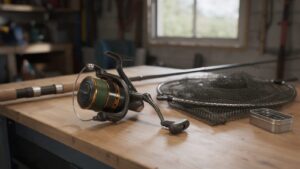
- Front drag. The main control, usually a dial on the front of the spool. This is the one you set for playing a fish.
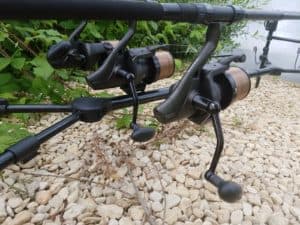
- Baitrunner or freespool systems. These let line leave the spool freely while the rod is on the rests, so a taking fish does not pull the rod in. When you pick up the rod you switch back to the main drag. Our guide to big pit reels explains the options.
How to Set Your Drag
- Know your line. Check its breaking strain on the spool.
- Start at a sensible figure. A common starting point is roughly a quarter to a third of the line’s breaking strain.
- Test it. Thread the line through the rings, hook the end to a fixed point or a scale, and pull the rod back steadily. The drag should give line smoothly rather than in jerks.
- Adjust. Make it a little tighter if you are fishing near snags or weed, and a little looser in open water with fine hooklinks.
- Re-check. Drag settings can shift during a session, especially after a big fish.
Tips for Playing Fish
- Keep the rod up and the line tight, and let the drag do the work.
- Do not wind against the drag, or you will twist the line.
- Be ready to tighten the drag a touch if a fish heads for cover. Our guide to fishing snags safely has more on that.
- Keep your hand clear of the spool and handle while the fish is running.
Common Drag Mistakes
- Locking the drag down because it feels safer. It often leads to more lost fish.
- Leaving the drag tight between sessions, which can damage the washers.
- Not setting the reel up after changing line. See how to set up a carp rod.
Read next:
Shane Stanford has fished for carp for over twenty years, in the UK and in France, and currently fishes a private syndicate water in West Sussex. He writes Fishing Again to put the things he learned the hard way into plain language: location and watercraft first, then bait, rigs and gear. He is straight about which kit he has actually fished and which he has assessed on specification, and says so on the page.