
Buying a bivvy before you know how you fish is the most expensive mistake in the tackle shop. A full bivvy is the right answer for a lot of anglers and the wrong one for plenty more, and the brolly and shelter systems in between have become good enough that the choice is real. This is how to make it.
The three options
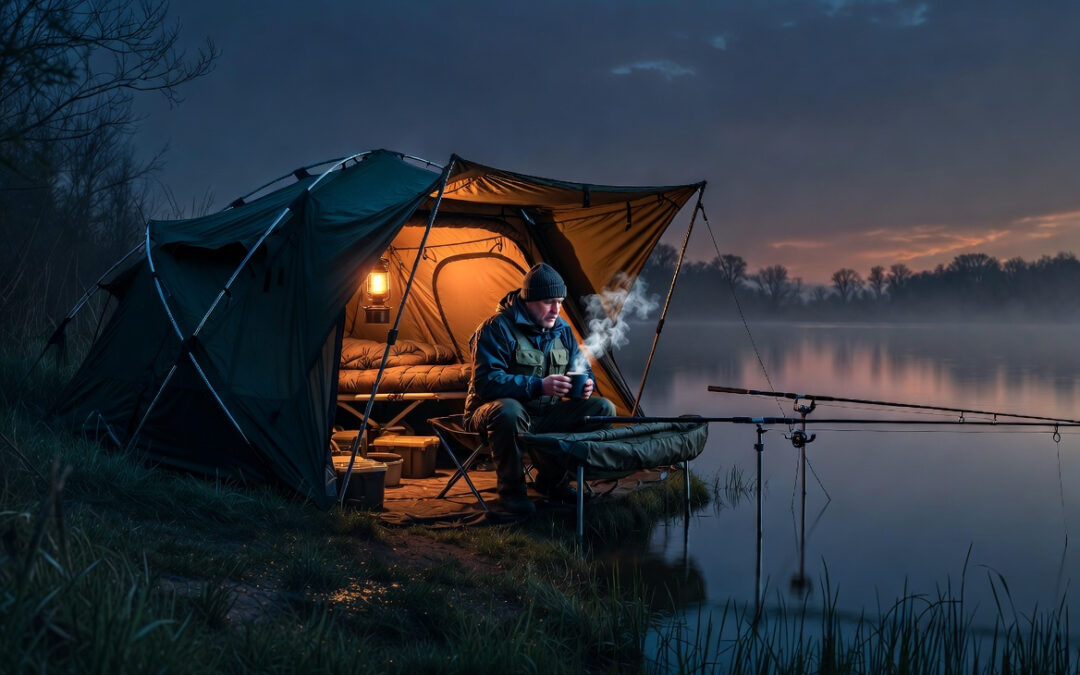
A brolly is a fishing umbrella on a pole with a groundsheet and, on the better ones, storm sides that zip on. It goes up in a minute, weighs three or four kilos, and gives you shelter from rain and wind for a day session or a mild night. A shelter system, sometimes called a brolly system, is a brolly with a rigid frame, a full front infill and proper pegging: halfway to a bivvy in weather resistance, most of the way there in speed. A bivvy is a tent designed for fishing: pegged, poled, fully enclosed, with a sewn or zip-in groundsheet and, on the good ones, a hydrostatic head rating that will keep out anything. It weighs from nine to twenty kilos, takes five to twenty minutes to put up, and it is a home for two or three nights.
What decides it
How long you fish for
Day sessions and the odd summer night: a brolly. Regular overnighters in all weathers: a bivvy. In between, the shelter system, which is where a lot of one-night anglers now sit. Be honest about which you actually do rather than which you plan to.
How much you move
If you follow the fish, a bivvy is an anchor. Every move is twenty minutes of pegs and poles and you will stay in a dead swim because of it. Mobile anglers fish under a brolly or a shelter system that goes up and down in two minutes, and they catch more for it.
The weather you fish in
A brolly in a winter gale is misery. If you fish through the year, the enclosed space, the pegging and the fabric rating of a proper bivvy are what keep you fishing rather than packing up at three in the morning. The hydrostatic head number matters here: 10,000mm is fine for summer, 20,000mm and above for all-year use.
How you get to the swim
A twenty-kilo bivvy plus a bedchair, a sleeping bag and the rest needs a barrow. If you walk in with a rucksack, a brolly system that packs to the size of a rod bag is the practical choice whatever the fishing.
What I would buy
- Days and summer nights, moving often: a 50 or 60-inch brolly with storm sides. Cheap, fast, light.
- One-nighters most weeks, some weather: a shelter system with a full infill and a groundsheet. The sweet spot for a lot of anglers.
- Two and three-night sessions, all year, France trips: a proper one-man bivvy with a 20,000mm+ rating and an overwrap for winter. The bivvy buyer’s guide has the ten I would choose from.
Whatever you buy, pitch it at home first, learn where every peg goes, and read the bivvy setup guide before the first night in the dark. The rest of the overnight kit is in the night fishing checklist.
Last Updated on September 10, 2026 by Shane Stanford
Shane Stanford has fished for carp for over twenty years, in the UK and in France, and currently fishes a private syndicate water in West Sussex. He writes Fishing Again to put the things he learned the hard way into plain language: location and watercraft first, then bait, rigs and gear. He is straight about which kit he has actually fished and which he has assessed on specification, and says so on the page.


