
Updated September 2026.
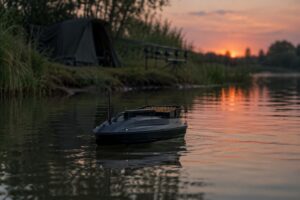
A bait boat is not essential kit for carp fishing, but for a specific set of problems, from distance beyond a comfortable cast to features you cannot safely reach any other way, nothing else does the same job.
What a Bait Boat Does That You Cannot
A bait boat delivers a hookbait and loose feed to a precise spot, checks it against a marker, and returns for another load, all without a single cast disturbing the swim. This matters most at long range, on waters with snags or overhanging features that make casting risky, and for placing bait in tight gaps between weed beds or islands that a lead simply cannot thread through.
Where They Are Banned
Many day-ticket and syndicate waters prohibit bait boats outright, often to protect other anglers’ lines, preserve a level playing field, or avoid disturbance on smaller lakes. Always check a water’s rules before buying with a specific venue in mind, since a boat that cannot be used there is money wasted.
What to Look For
Hopper capacity, GPS or waypoint marking for returning to the same spot repeatedly, a reliable sonar unit for reading depth and features, and battery life for a full session are the factors that separate a genuinely useful boat from an expensive toy. Build quality and prop guards matter too, particularly on waters with snags or where the boat will regularly run close to structure.
Budget, Mid-Range and Premium Options
Entry-level boats cover short to medium range with a basic hopper and no sonar, suiting anglers who mainly want accurate, disturbance-free placement rather than feature-finding. Mid-range boats add sonar and GPS marking, useful for locating and returning to features on unfamiliar water. Premium boats extend range, hopper capacity and battery life considerably, and suit anglers regularly fishing big waters or long, demanding sessions where a boat needs to work hard all day.
Setting Up and Dropping Accurately
Marking a spot on the boat’s GPS or sonar the first time you find it means every subsequent trip drops bait in exactly the same place, building a consistent baited area over a session or a longer campaign. Testing the release mechanism at home before a session avoids fumbling with an unfamiliar hopper release on the bank in the dark.
Batteries and Range
A spare battery is close to essential for anything beyond a short session, since running out of charge mid-delivery, or on the way back, is more than an inconvenience if the boat is a long way out. Cold weather reduces battery performance noticeably, so winter sessions in particular benefit from carrying more charge than the stated range might suggest is necessary.
The Case Against
A bait boat adds cost, weight and one more thing to transport, charge and maintain, and on many waters a well-placed cast or a good spod delivers bait just as effectively for a fraction of the outlay. For anglers fishing waters within comfortable casting range, without heavy snags or extreme distances, the case for a boat is much weaker than the marketing around them suggests.
For getting bait out by hand instead, see our guide to spod mix recipes, and for the rules and etiquette that govern gear like this on day-ticket and syndicate waters, our guide to catching carp on pressured day-ticket waters.
Read next:
- Spod mix recipes for carp fishing
- Carp baiting strategy
- How to catch carp on pressured day-ticket waters
Last Updated on September 10, 2026 by Shane Stanford
Shane Stanford has fished for carp for over twenty years, in the UK and in France, and currently fishes a private syndicate water in West Sussex. He writes Fishing Again to put the things he learned the hard way into plain language: location and watercraft first, then bait, rigs and gear. He is straight about which kit he has actually fished and which he has assessed on specification, and says so on the page.