
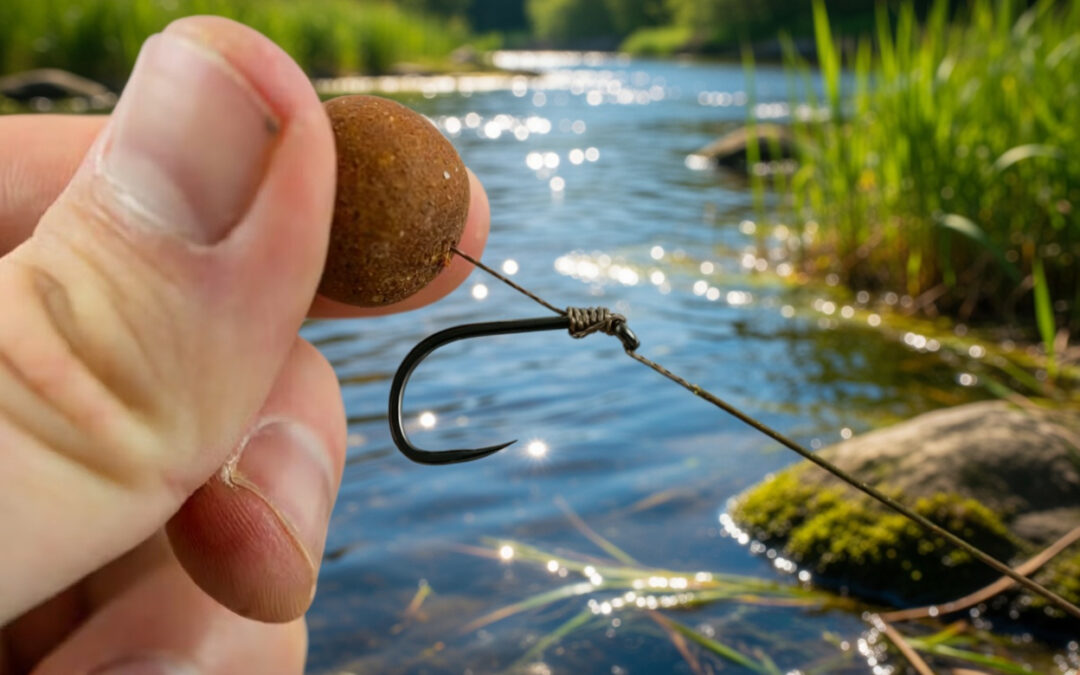
A hook pull is the take you did everything right for until the last thirty seconds. The alarm went, you leaned in, the fish ran and then the rod sprang straight. It happens to everyone, but if it is happening to you more than once in every eight or ten fish, something in the chain is wrong, and it is almost always one of the things below. Work through them in order.
1. The hook point
Most hook pulls start before the take. A hook that is even slightly blunt takes hold in the outer skin of the lip rather than driving through, and it tears out under pressure. Check the point against your thumbnail before every cast: it should grip, not slide. Gravel, weed, a bream, or a single cast into a snag will turn a sharp hook into a blunt one. Carry a hook file or a sharpening stone, or change the hook; hooks are the cheapest thing in the box. In cold water and on hard-mouthed old fish, sharp matters even more.
2. The hook pattern and size
Wide-gape patterns hold well but can take a shallow hold in the lip; longer-shank and curved-shank patterns turn more aggressively and tend to find the bottom lip. If you are losing fish on a wide gape, try a curve shank with a shrink-tube or kicker to steepen the angle. Going up a size often fixes hook pulls on bigger fish; a size six holds a twenty better than a size ten. Beaked points can slide across a hard mouth, so on old, scarred fish a straight point can be better. My guide to choosing a carp hook goes through the patterns.
3. The rig mechanics
A rig that does not turn cannot hook a fish properly, and a hook that has only just caught hold pulls. Check that the hair is the right length, that the bait sits where it should, that the hooklink is not stiff enough to stop the hook turning, and that a rig ring or kicker is doing the aligning. A short hooklink over a heavy lead gives a positive bolt effect but can result in the hook taking hold before it has turned; a longer link lets the fish move further before it feels the lead and often gives a deeper hold. If your rigs are tangling on the cast you are fishing a rig that is not doing anything at all. The complete rig guide covers the mechanics of each.
4. Lead size and the lead arrangement
The lead sets the hook. Too light a lead, especially with a slack line, and the fish feels nothing and the hook never goes past the barb. A lead clip that drops the lead too easily, or an inline lead that has slid up the leader, removes the bolt effect at the moment it matters. As a rule, fish the heaviest lead you can cast comfortably, and make sure it does what you set it up to do.
5. How you play the fish
Striking hard at a bolt-rigged fish tears the hold; lean in and let the rod bend. Then keep the pressure steady. Most hook pulls that are down to playing happen when the pressure comes off: winding down slack after a fish turns, dropping the rod tip to walk, easing off at the net. Keep the rod bent, walk with the rod up, and net the fish when it is on its side and beaten rather than lunging at it with the net while it can still kick. Too tight a clutch snaps hooklinks; too loose a clutch lets the fish shake its head with a slack line, and that is when hooks fall out. Set the clutch so the fish can take line under real pressure but not run freely.
6. The water and the fish
Some waters simply produce more hook pulls: heavily fished lakes where the carp have hard, scarred mouths, weedy waters where fish bury themselves and the line goes slack, and snaggy waters where you have to hold on harder than you would like. Soft-mouthed fish straight after spawning tear more easily too. On those waters you scale up the hook, steepen the rig, fish a heavier lead, use a longer hooklink where it helps, and accept that a few more fish will come off than on a pristine syndicate.
The order to change things in
- Sharpen or change the hook. Do this first and do it every time.
- Go up a hook size, and try a curved shank pattern with a kicker.
- Check the rig turns properly: hair length, bait position, hooklink stiffness.
- Fish a heavier lead and check the lead arrangement.
- Look at how you play fish: no strike, steady pressure, net the fish when it is ready.
If you have done all five and fish are still coming off, the problem is the water and the fish, and the fix is patience and a bigger hook. If you are also getting aborted takes and single bleeps rather than hook pulls, that is a different problem, covered in the bite indication section of the bite alarms guide.
Read next
Last Updated on September 10, 2026 by Shane Stanford
Shane Stanford has fished for carp for over twenty years, in the UK and in France, and currently fishes a private syndicate water in West Sussex. He writes Fishing Again to put the things he learned the hard way into plain language: location and watercraft first, then bait, rigs and gear. He is straight about which kit he has actually fished and which he has assessed on specification, and says so on the page.


